Last updated November 21, 2026
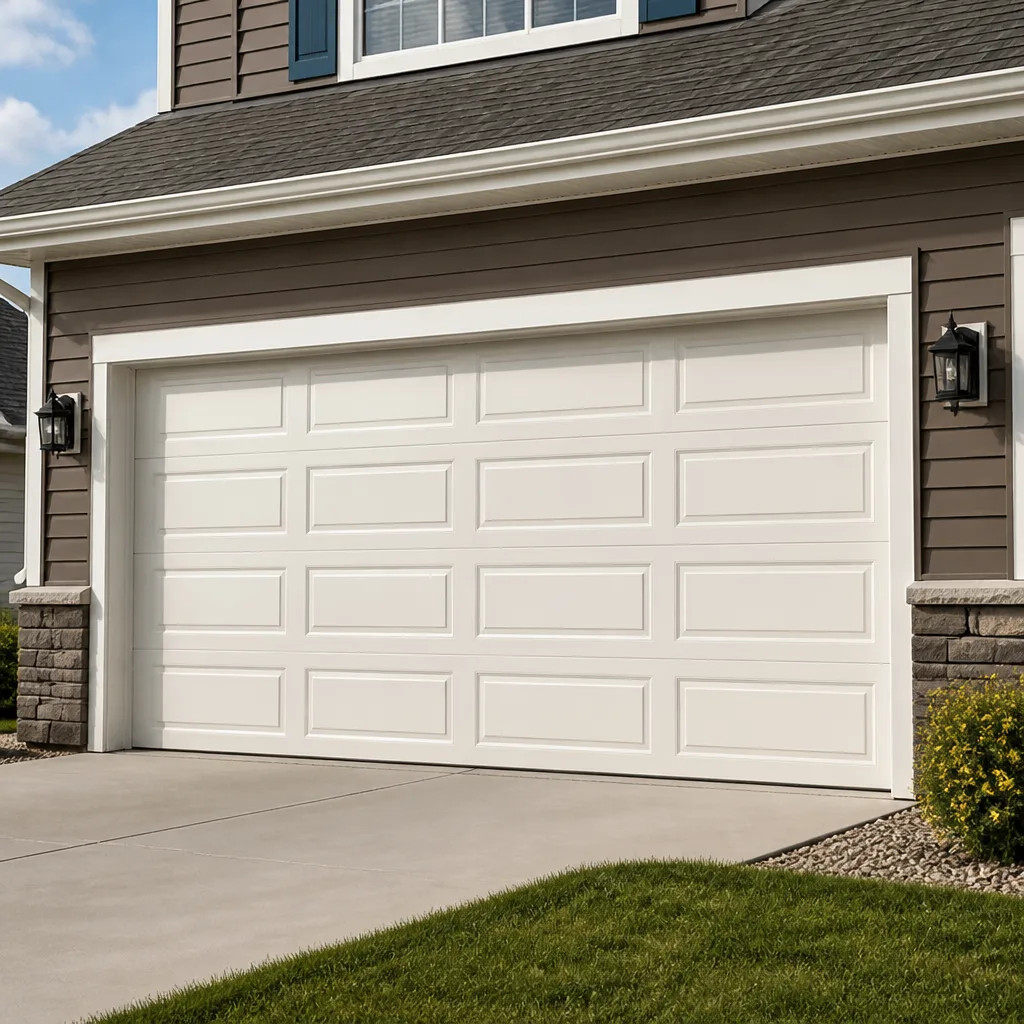 Raised-panel steel
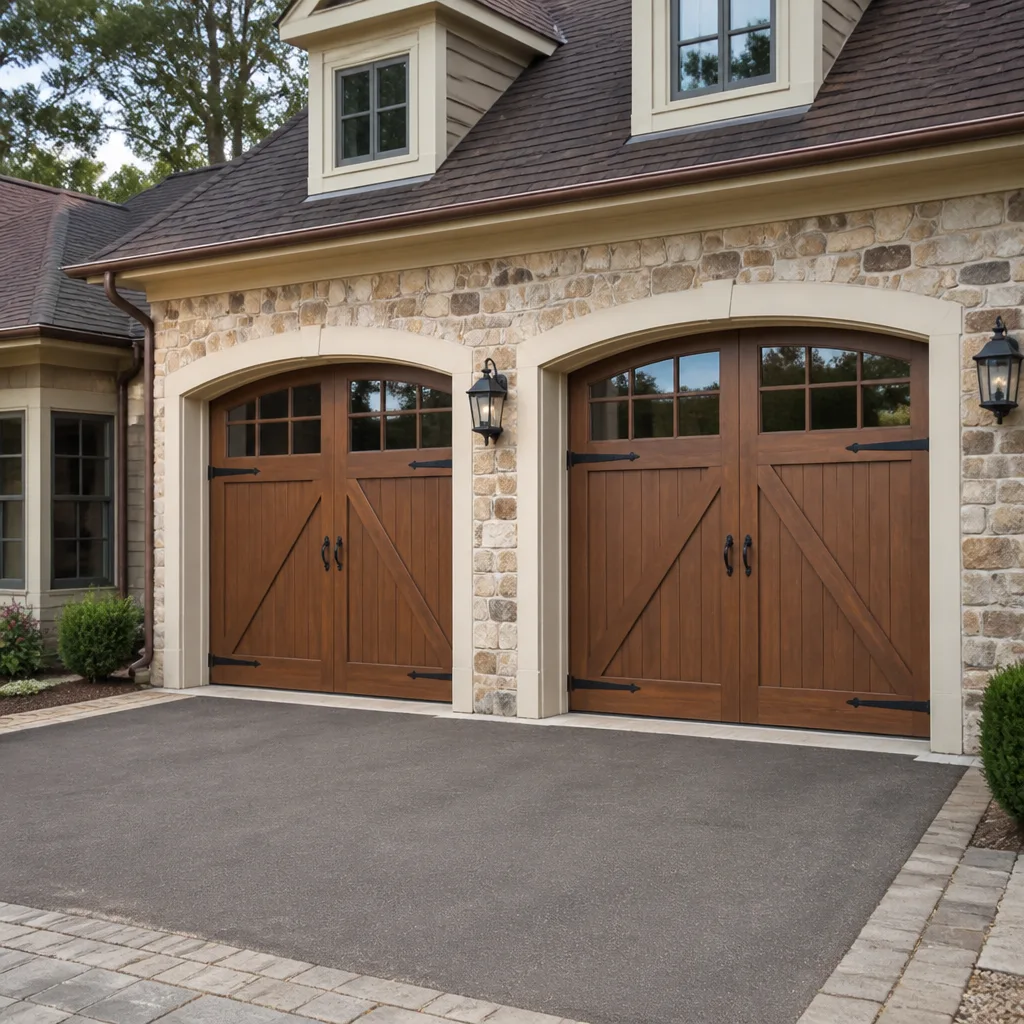 Carriage house
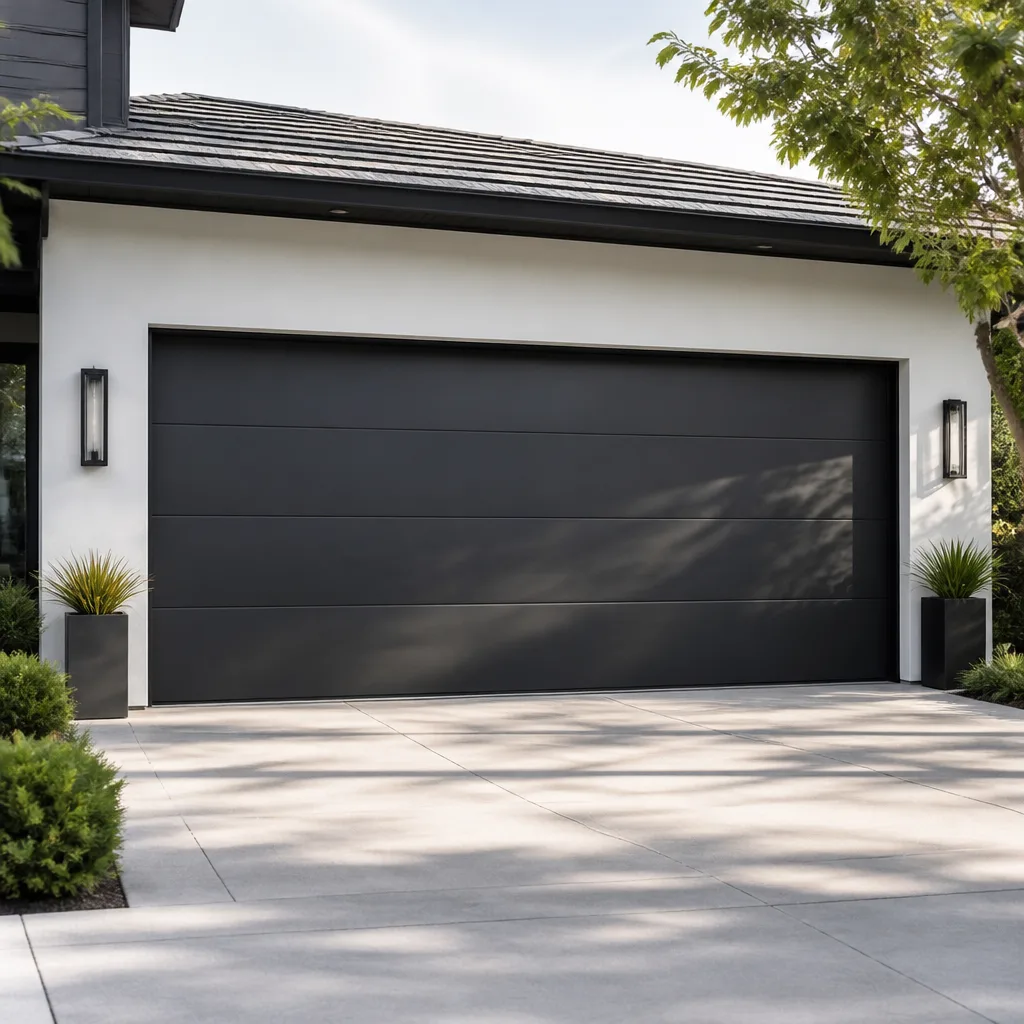 Modern flush
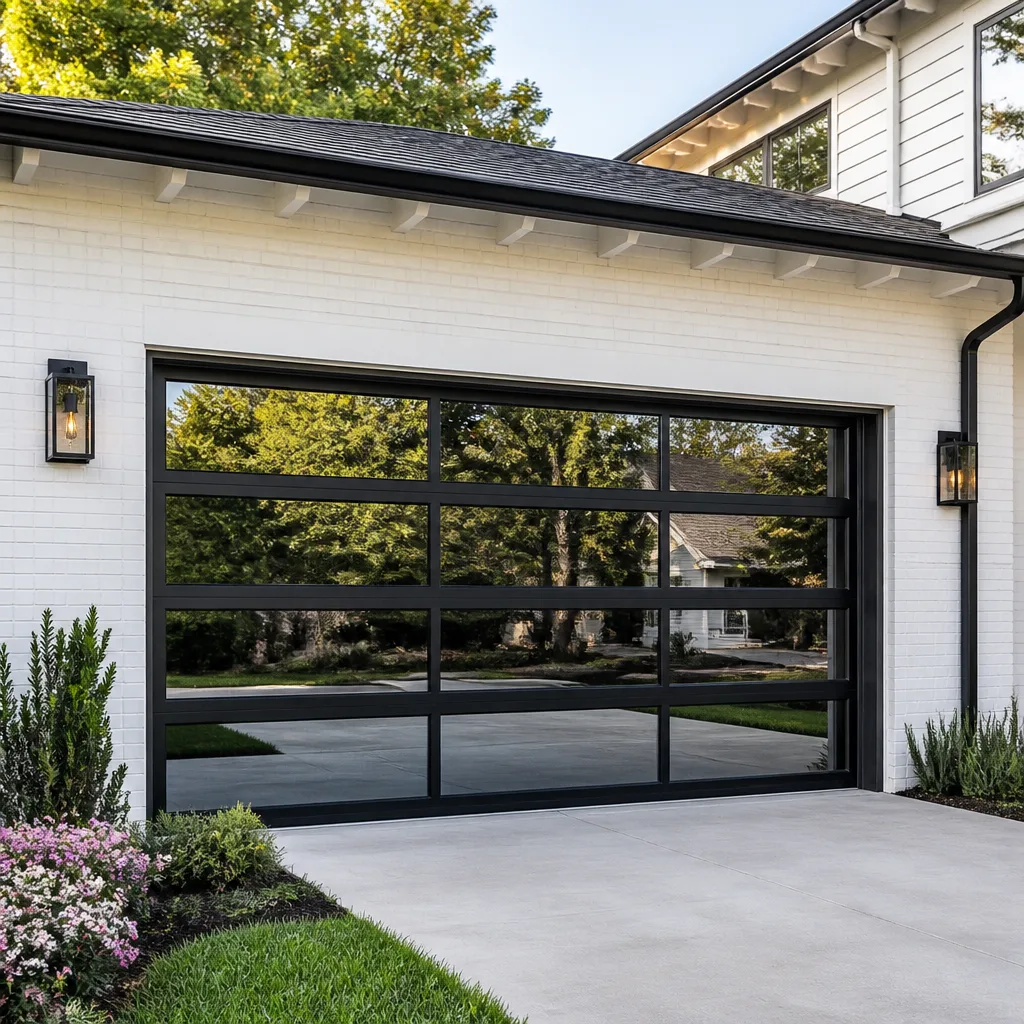 Full-view glass
 LiftMaster openers
 Chamberlain openers
Full 25-point door and opener safety check with every visit - springs, cables, rollers, tracks, and your LiftMaster or Chamberlain opener included
You get a price before we start. It does not change when the pro arrives.
Get your free estimateGarage Door Emergency Preparedness Guide for Kingfield Homes
Most garage door advice tells you what to do after the door breaks. That’s backward. In a cold inland climate like ours, the stress of a failed door rarely comes from the failure itself. It comes from the ten minutes right after, when nobody knows where the manual release is, whether the car is trapped, or which number to call. Preparedness is quieter than that. It means making three decisions in advance so a January failure is a nuisance instead of a scramble. This guide walks through those decisions, the Kingfield scenarios that make them matter, and the practical steps that keep a bad night from becoming a worse one.
Quick Answer
Garage door emergency preparedness means knowing three things before anything breaks: where your manual release is and how to test it, the model of your door and opener, and the number of a service that actually answers emergency calls. In Kingfield, the most common winter emergencies are power outages, storm-driven door damage, and spring or opener failures that trap a vehicle. Testing your release cord and saving a real emergency contact now saves hours of stress later.
Styles & brands we work with
- Raised-panel steel
- Carriage house
- Modern flush
- Full-view glass
- LiftMaster openers
- Chamberlain openers
Table of Contents
- Why Kingfield Winters Make Garage Door Failures Worse
- How to Test and Use Your Manual Release Cord Before You Need It
- Power Outage Protocol: Battery Backup vs. Manual Operation
- What to Tell a Dispatcher to Get an Accurate ETA and the Right Parts
- Temporary Security When a Door Is Stuck Open Overnight in Winter
- The Pre-Failure Decision Checklist
- When the Door Traps a Vehicle Inside
- Why Spring Failures Are the One Emergency You Should Never DIY
Why Kingfield Winters Make Garage Door Failures Worse
Garage doors are mechanical systems, and mechanical systems tighten, stiffen, and slow down in the cold. In a place like Kingfield, where winters are long and genuinely cold, that means your door is under more load in January than in July, and any part already near the end of its life tends to fail when the temperature drops. Springs lose some of their responsiveness, lubrication thickens, and metal contracts. None of this is dramatic on its own. It matters because these small stresses stack up on the same door at the same time.
Snow and ice add a second layer. A door that’s been pushed by drifts against the bottom seal, or one whose tracks have taken a hit from a plow throwing snow at the edge of the driveway, is a door that’s no longer running true. An opener working against a misaligned door wears faster and can trip its safety sensors. Ice at the threshold can stop a door from closing fully, and a door that reverses partway down every time can look like an opener problem when the real issue is a frozen seal.
- Cold stiffens lubricants and increases load on springs and the opener.
- Ice at the bottom seal causes false reversals and incomplete closes.
- Plow-thrown snow and drifts can knock tracks out of alignment.
- Temperature swings expand and contract metal, loosening hardware over time.
What this means for preparedness is simple: Kingfield homes should expect their door’s weakest component to reveal itself during the coldest stretch of the year. That’s not pessimism, it’s a reason to check the door in the fall, before the first hard freeze, and to know who you’ll call if it fails anyway. If a door is already struggling as winter sets in, a routine garage door repair visit in autumn is far less stressful than an emergency call in a snowstorm.
How to Test and Use Your Manual Release Cord Before You Need It
Every garage door with an opener has a manual release, usually a red cord or handle hanging from the trolley that connects the door to the opener rail. Pulling it disconnects the door from the opener so you can lift the door by hand. Almost nobody tests it. That’s the problem. A release that hasn’t been pulled in years can be stiff, tangled, or attached to a trolley that won’t re-engage cleanly, and the moment you discover that is exactly the moment you need it to work.
Testing the release is a low-risk, ten-minute job you can do with the door closed and the car outside. Here’s the sequence we recommend:
- Close the door and turn off the opener at the wall switch or unplug it, so nobody can activate it while you’re working.
- Stand clear of the door and pull the release cord firmly downward. You should feel the trolley disconnect.
- Lift the door by hand about a foot, then lower it slowly. It should move smoothly. If it’s very heavy or won’t stay up, the springs may be weak, and you should stop and have it looked at rather than forcing it.
- Re-engage the trolley by pulling the release cord again (or following the re-engage direction on your opener), then run the opener through one full open-and-close cycle to confirm it reconnected properly.
- Check that the cord hangs low enough to reach but high enough that it won’t catch on a car roof or a bike handlebar.
One important safety note: the door itself will be heavy to lift if your springs are worn, and the springs are under high tension even when the door is closed. Don’t try to adjust, remove, or inspect the springs yourself. The manual release is for disconnecting and lifting the door by hand, not for repairing it. If the door feels unusually heavy during a test, that’s a signal to have a trained technician check the springs, not a signal to push harder.
Power Outage Protocol: Battery Backup vs. Manual Operation
A power outage is the most predictable garage door emergency there is, and it’s the one most Kingfield homes are least prepared for. The good news is that there are two ways to handle it, and knowing which one your door offers changes what you do in the first minute.
Battery backup openers are exactly what they sound like: the opener has a rechargeable battery that takes over when the household power drops, usually letting you open and close the door a limited number of times before it needs recharging. If your opener has this feature, the protocol is simple. Leave the door alone as much as possible to conserve battery, and confirm the battery is actually healthy by testing it a couple of times a year. A dead backup battery is worse than no backup battery, because it gives you false confidence.
Manual operation is the fallback for openers without battery backup. That means pulling the release cord and lifting the door by hand, which brings you back to testing the release in advance. A few practical notes for a Kingfield outage:
- Know where the release cord is before the lights go out. In a dark garage, fumbling for it wastes time and risks a fall.
- Keep a working flashlight in the garage. A phone light works, but it leaves you one-handed while you’re lifting a door.
- Don’t leave the door disconnected from the opener if you can avoid it. A disconnected door can drift down, and re-engaging it later is easier when you haven’t forgotten it’s offline.
- If your car is inside and you need to leave, lift the door fully and prop or hold it open before you start the car, never with the car already moving.
If you’re not sure whether your opener has a battery backup, that’s the first thing to find out. We work on openers from LiftMaster, Chamberlain, Genie, Craftsman, and others, and a quick garage door opener repair visit can confirm your backup status and replace an aging battery before it fails. This is one of the simplest preparedness steps a Kingfield homeowner can take, and it’s easy to overlook.
What to Tell a Dispatcher to Get an Accurate ETA and the Right Parts
When you call an emergency line, the quality of the information you give in the first thirty seconds determines how fast and how well the problem gets handled. A dispatcher who knows your door’s brand, model, and symptom can bring the right parts and give you a realistic arrival window. A dispatcher who hears only “my door is broken” has to guess.
Before you dial, have these details ready:
- Your door brand and model, if you know it. A sticker on the door panel or the opener housing usually lists it. Amarr, Wayne Dalton, Craftsman, Raynor, Clopay, and others each have different part profiles, and brand-specific knowledge speeds the fix.
- What the door is doing. Won’t open at all, opens partway and reverses, stuck open, stuck closed, making a grinding or snapping noise, or off its tracks. Describe the symptom in plain terms.
- Whether a vehicle is trapped. This changes the urgency and can change what the technician recommends when they arrive.
- Whether the opener has power. Lights on or off, any beeping, any error codes on a wall unit.
- Your address and any access notes. Snow-covered driveways, a narrow alley, or a door that faces a busy street all affect how the call goes.
If you’re not sure of the model, a photo of the door and the opener housing sent ahead helps enormously. The goal is the same one we set for every Kingfield emergency call: arrive with the knowledge to fix it, not to diagnose it from scratch in your driveway.
Temporary Security When a Door Is Stuck Open Overnight in Winter
A door stuck open in a Kingfield cold snap is two problems at once. The house is losing heat fast, and the garage is wide open to the street. You need to secure the opening and keep the pipes from freezing before the repair happens, and the right temporary measures differ from what you’d do in summer.
Here’s how to think about it:
- Block the opening from the inside where possible. A heavy object placed against the door from inside, or a piece of plywood set across the opening, keeps it from being an open invitation. Don’t rely on a flimsy barrier alone.
- Close off the house from the garage. Shut the interior door, and if you have a spare blanket or towel, run it along the bottom to reduce cold air entering the home.
- Keep an eye on anything in the garage that shouldn’t freeze. Water lines, a washer, or stored liquids are worth protecting with a space heater set safely away from anything flammable, and only while you’re awake to watch it.
- Don’t try to force the door down. A door that’s off its tracks or has a broken spring can come down hard and cause injury. Leave it where it is and let a technician handle it.
- Call for service and give an honest assessment. Tell them the door is open and the house is exposed. That’s the kind of situation an emergency call is designed for.
The point of a temporary measure is to buy time, not to fix the door. We’d rather a Kingfield homeowner have a safely blocked opening and an honest assessment of the wait than a DIY repair attempt that goes wrong. If you’re worried about a door that’s sitting open and you can’t get it closed, call and describe it. The right next step depends on whether the problem is a spring, a track, or an opener, and each has a different answer.
The Pre-Failure Decision Checklist
This is the heart of the whole guide. Emergency preparedness comes down to a handful of decisions you make once, on a calm afternoon, so that the night something fails you’re not deciding anything at all. Work through this list when nothing is wrong. It takes half an hour and it pays for itself the first time you need it.
- Save an emergency garage door contact in your phone. Not a general handyman, not a home warranty line that routes through a call center. Save a number you’ve confirmed handles emergency garage door calls. Ours is (877) 492-3659.
- Document your door and opener. Write down the brand and model of both, and take a photo of each label. Keep it somewhere you can find it without opening the garage.
- Locate and test the manual release. Find the cord, pull it, re-engage it, and confirm it works. Do this at least once a year and after any long stretch of not using the door.
- Check your opener’s battery backup status. Know whether you have one, and whether it holds a charge.
- Keep a flashlight and a small toolkit in the garage. A phone light works, but a proper flashlight in a known spot is better when the power is out.
- Confirm the door’s balance. Lift the door by hand to about waist height with the opener disconnected. It should stay put with minimal effort. If it slams or won’t hold, the springs need attention.
- Note your driveway access. In heavy snow, make sure a service call can actually reach the door. A path cleared to the garage matters when a technician is trying to help.
We’ve seen how much difference this checklist makes. Homes where someone has already tested the release and saved a real number handle a failure in minutes. Homes where nobody has done either tend to spend an hour troubleshooting before they even make a call. The difference isn’t luck. It’s the three decisions, made early.
See the difference
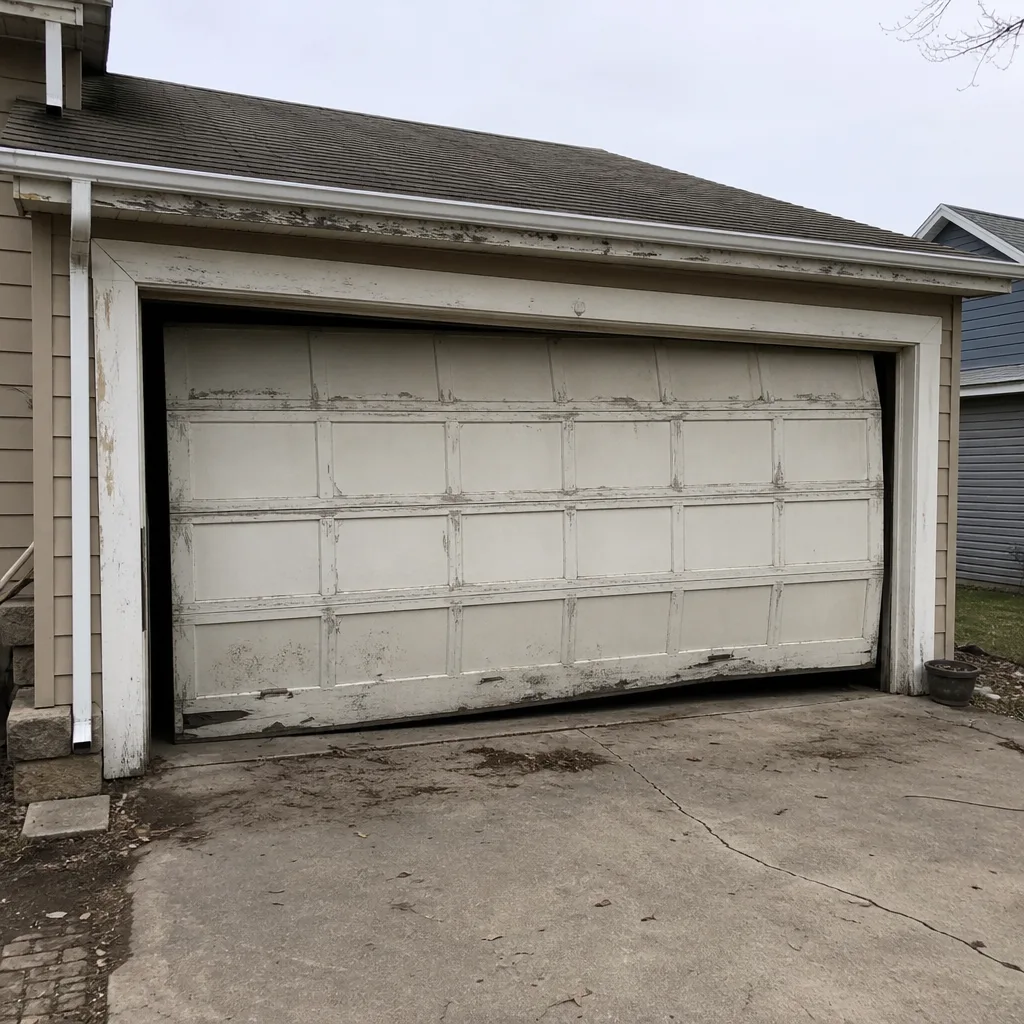 Before
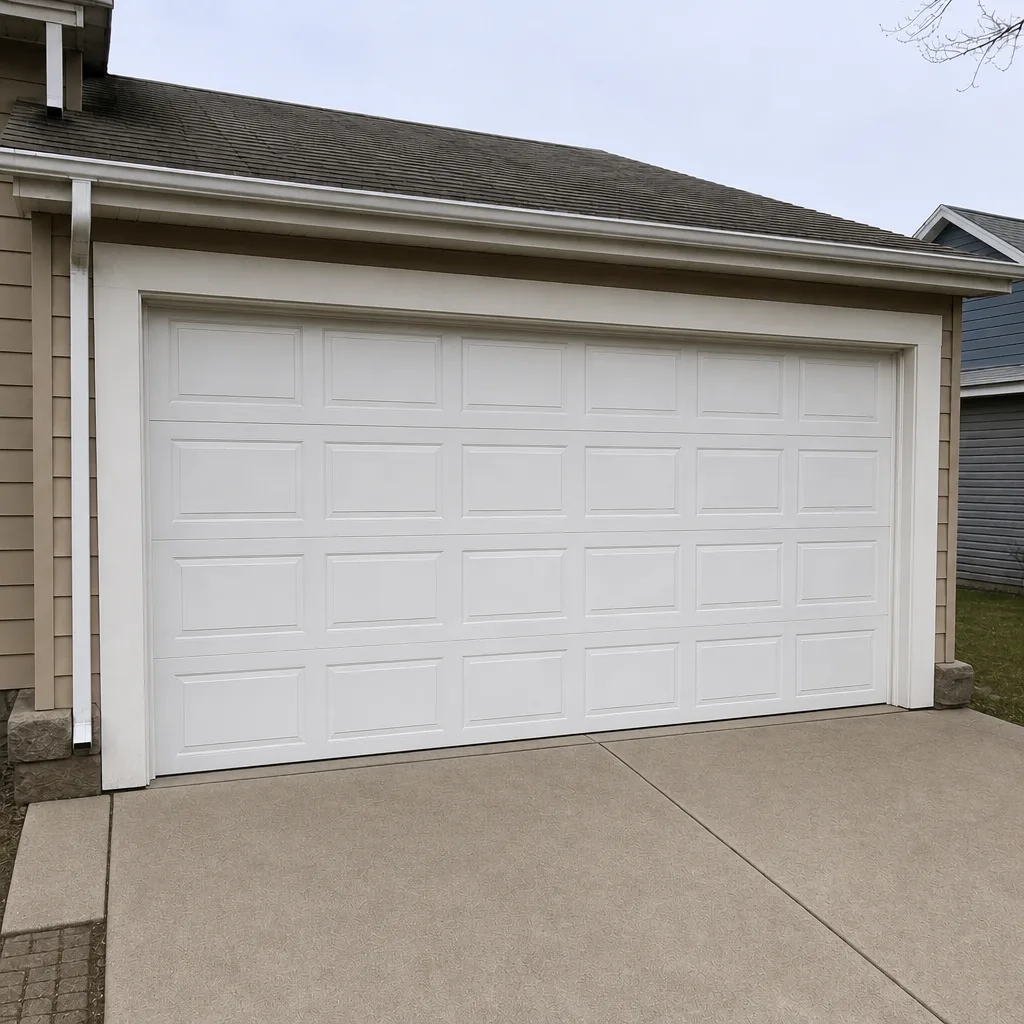 After
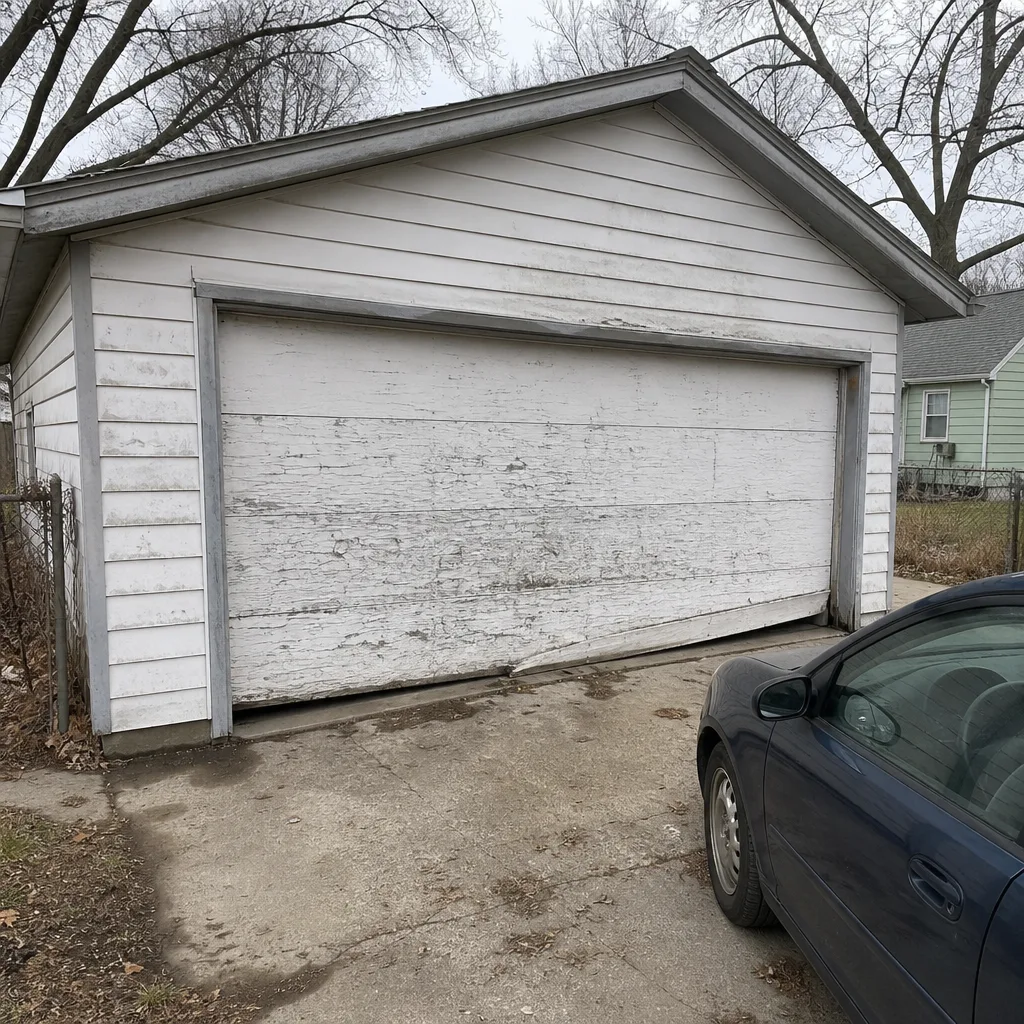 Before
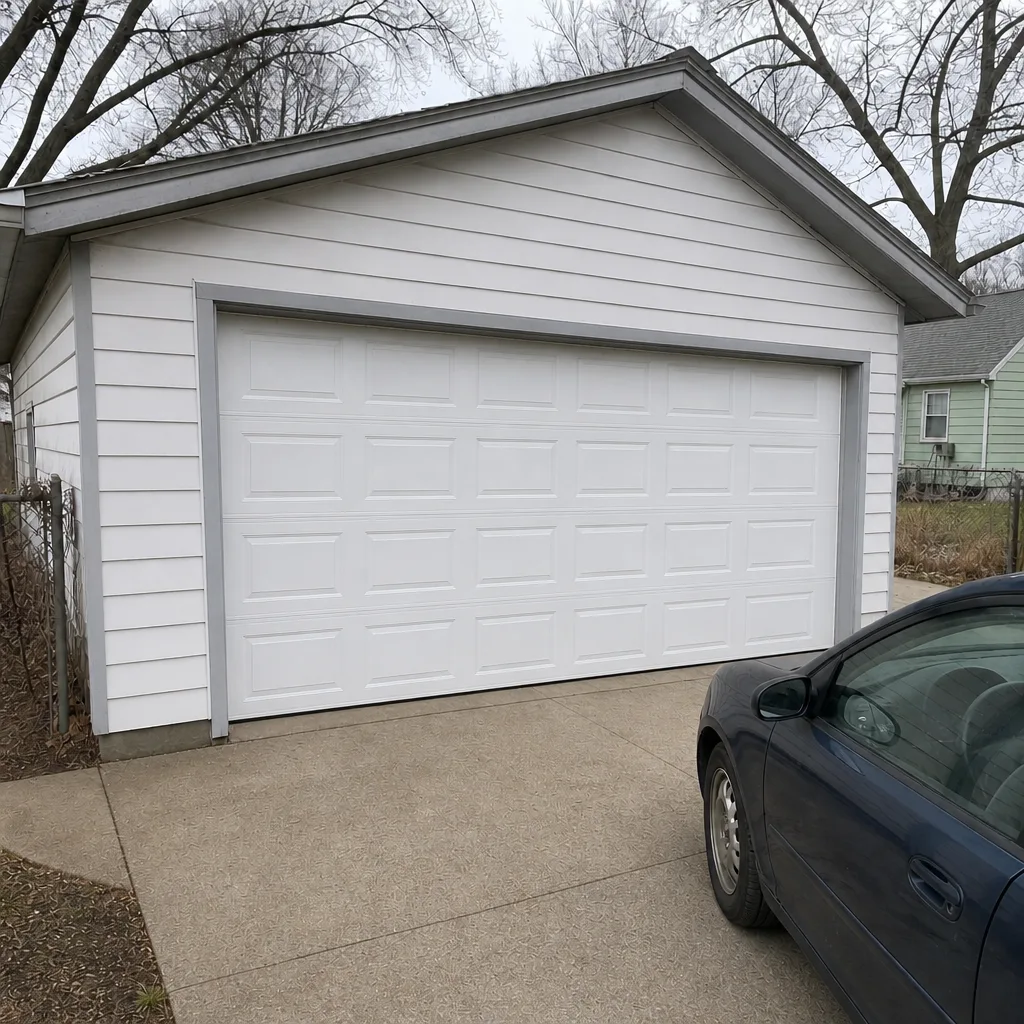 After
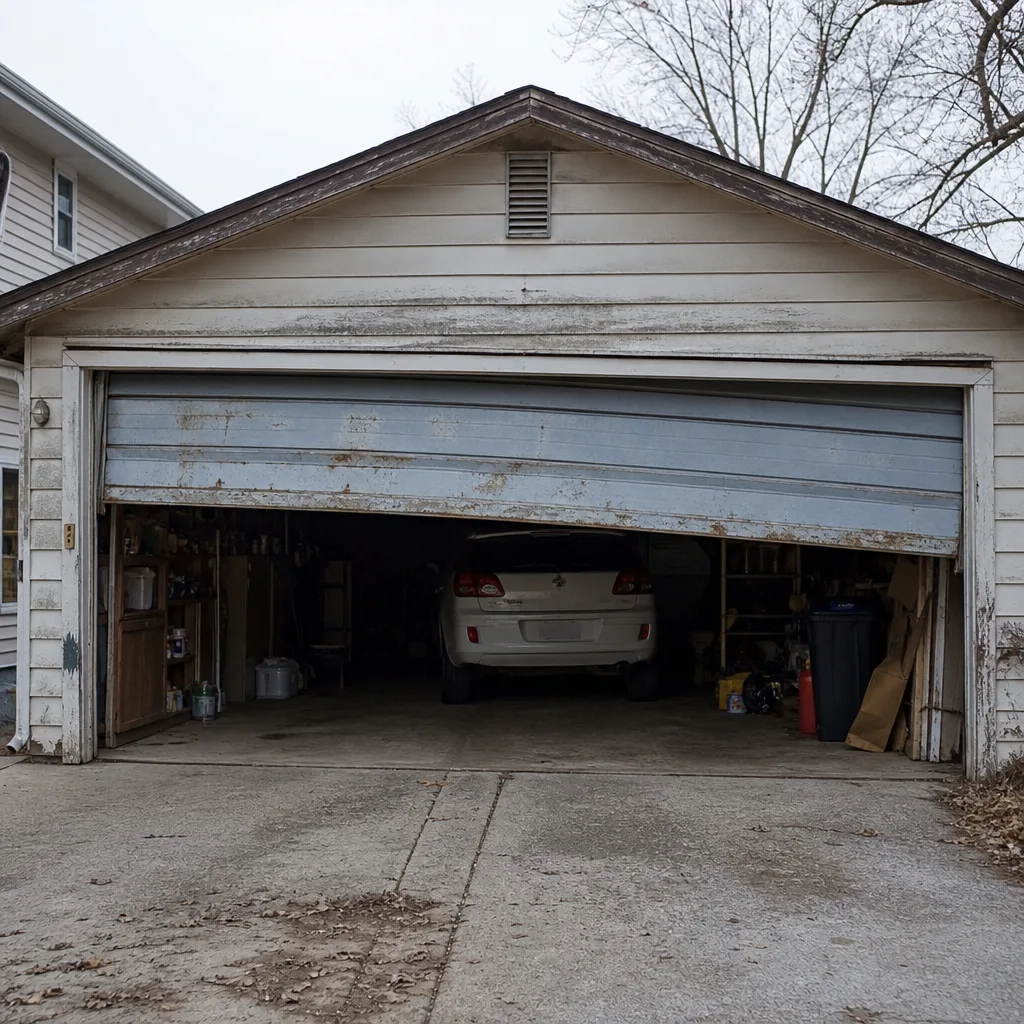 Before
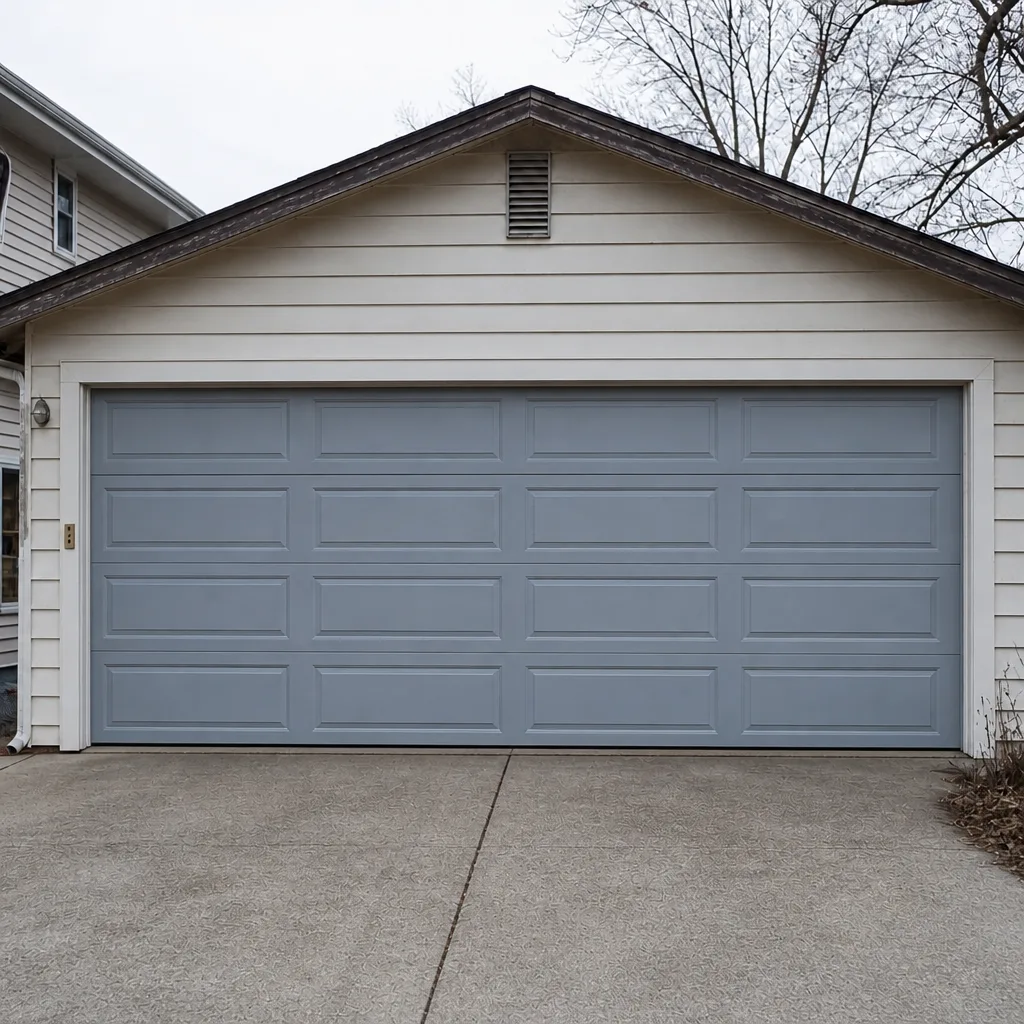 After
When the Door Traps a Vehicle Inside
A car trapped behind a failed door is the scenario Kingfield homeowners dread most, and it’s usually more manageable than it feels. The first question is whether the door can be opened manually. If your door has a manual release and the springs are intact, you can disconnect the opener and lift the door by hand, then drive out. If the door is off its tracks, has a broken spring making it impossibly heavy, or is jammed, forcing it is dangerous and can turn a repair into a panel replacement.
If the car is trapped and the door won’t lift safely, the right move is to call for emergency service and describe the situation clearly. A technician who knows a vehicle is trapped can prioritize the call and, in many cases, get the door operable enough to free the car and then return for the full repair. We’ve handled enough of these to know that the fastest path out is almost never a homeowner forcing a heavy door by hand. The fast path is a trained technician with the right spring and track knowledge, arriving with the parts the call requires.
One preparedness tip that pays off here: keep the garage’s interior door passage clear. If your garage shares a wall with the house and has a people door, knowing it’s unobstructed means nobody’s trapped even when the car is. It sounds obvious, but clutter at the passage door is exactly the kind of thing you don’t want to discover in a hurry.
Why Spring Failures Are the One Emergency You Should Never DIY
Torsion springs, the large springs mounted above the door, are under enormous tension even when the door is fully closed. When one breaks, it releases that tension all at once, which is why a snapped spring makes a sound like a gunshot. Extension springs, mounted along the sides, carry similar stored energy. This is the one part of a garage door system where a homeowner repair attempt can cause serious injury, and it’s the reason spring repair is a specialty rather than a general task.
What you should do when a spring breaks is straightforward, and none of it involves touching the spring:
- Don’t operate the door. A door with one broken spring of a matched pair is dangerously unbalanced.
- Don’t try to lift it by hand to check. The remaining spring can be under load in a way that surprises you.
- Block the door so nobody uses the opener out of habit, and keep kids and pets clear.
- Call for emergency spring service and describe the symptom. A loud snap followed by a door that won’t lift is the classic description.
We want to be direct about this: spring repair is the highest-risk job in the trade, and our technicians are trained specifically for it. A garage door that’s lost a spring should be treated as unsafe until a professional has replaced the spring, balanced the door, and checked the opener’s force settings. That last step matters. An opener that’s been straining against a failing spring can need adjustment even after the spring is fixed, so a proper repair addresses both.
Common Mistakes to Avoid
- Never testing the manual release until you need it. A release that’s stiff or tangled fails exactly when it matters. Test it on a calm afternoon, not during a January outage.
- Saving the wrong emergency number. A general handyman or a warranty call center may not handle true emergency garage door calls. Save a number you’ve confirmed is built for it.
- Assuming a power outage means a dead door. Many openers have battery backup. Check yours before the next storm, so you know which protocol applies.
- Forcing a door that’s off its tracks. A track that’s been knocked out of alignment can twist a panel or drop the door. Stop and call.
- Trying to adjust springs yourself. This is the single most dangerous mistake in the trade. Springs are under high tension and can cause serious injury.
- Ignoring a door that reverses partway down in cold weather. Ice at the seal, a misaligned track, or a failing opener can all cause it. Left alone, it wears the opener and risks trapping a car.
- Waiting until snow to clear driveway access. A service call that can’t reach the door takes longer and costs more stress. Keep a path to the garage clear during storms.
When to Call a Professional
Some garage door problems can wait for a scheduled appointment. Others can’t. Call for emergency service when a door is stuck open and the house is exposed, when a vehicle is trapped, when you hear the crack of a broken spring, when a door has come off its tracks, or when the opener is running but the door isn’t moving. These are the situations our emergency service is built for, and calling early is almost always cheaper than the damage a forced door can cause.
For non-emergency work, like a noisy opener, a door that’s slow to close, or a planned replacement, a scheduled visit is the right approach. If you’re planning a full replacement rather than a repair, our garage door installation service covers new doors and openers, and we’ll measure and quote before anything is ordered. For emergency calls, repair visits, or a free estimate in Kingfield, call (877) 492-3659. Estimates are free, and the price is quoted and agreed before any work starts.
Frequently Asked Questions
The manual release is usually a red cord or handle hanging from the trolley that connects the door to the opener rail, positioned near the top of the door. Pulling it disconnects the door from the opener so you can lift it by hand. If you can’t find it, check along the opener rail with a flashlight, and test it once you’ve located it.
Many modern openers from LiftMaster, Chamberlain, Genie, and others include a battery backup, but not all do. Check the opener housing for a battery compartment or a backup indicator light, and test it by unplugging the opener briefly to see if it still runs. If you’re not sure, a technician can confirm it during a service visit. Call (877) 492-3659 for a free estimate.
Block the opening from the inside as best you can, close off the house from the garage to keep heat in, and call for emergency service. Don’t try to force the door down if it’s off its tracks or has a broken spring. A technician who knows the door is open and the house is exposed can prioritize the call. For emergency service, call (877) 492-3659.
Yes. Emergency garage door service is a core offering, not an afterthought. When a door won’t open, won’t close, or has trapped a vehicle, call (877) 492-3659 and describe the situation so we can bring the right parts and give you an accurate arrival window. We’re not built to hand you a voicemail and hope for the best.
A garage door that’s unusually heavy to lift usually has worn or broken springs, or a door that’s out of balance. With the opener disconnected, a healthy door should lift with moderate effort and hold its position at about waist height. If it slams down or won’t stay up, stop and have the springs checked by a technician rather than forcing it.
Warning signs include a door that feels heavy, a door that opens unevenly, a loud bang from the garage, or visible gaps in a spring coil. Springs can also fail without much warning, which is why balance checks matter. If anything feels off, don’t operate the door and call for a professional inspection at (877) 492-3659.
The Bottom Line
Garage door emergencies feel sudden, but most of the stress comes from decisions you haven’t made yet. Test your manual release. Confirm whether your opener has battery backup. Write down your door and opener model. Save a number you’ve confirmed handles emergency calls. Clear a path to the garage before the storm. None of these take long, and together they turn a bad night into a manageable one. Kingfield winters are hard on doors, and the homes that handle failures best are the ones that prepared when nothing was wrong. When something does go wrong, or when you’d rather have a professional check the system before winter, call Garage Door Repair Kingfield at (877) 492-3659 for a free estimate. Our technicians have up to 10 years of experience, and the price is quoted and agreed before any work begins.
Written by the team at Garage Door Repair Kingfield.