Last updated November 21, 2026
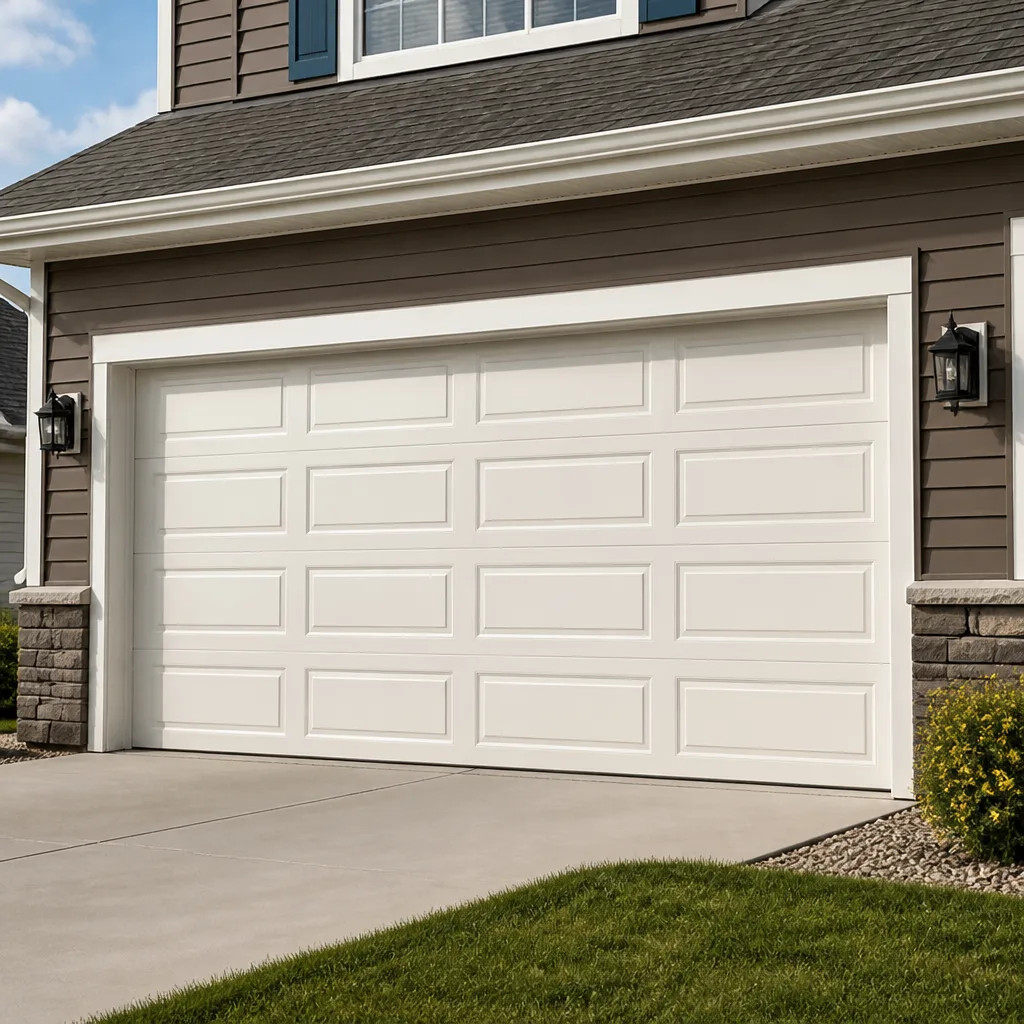 Raised-panel steel
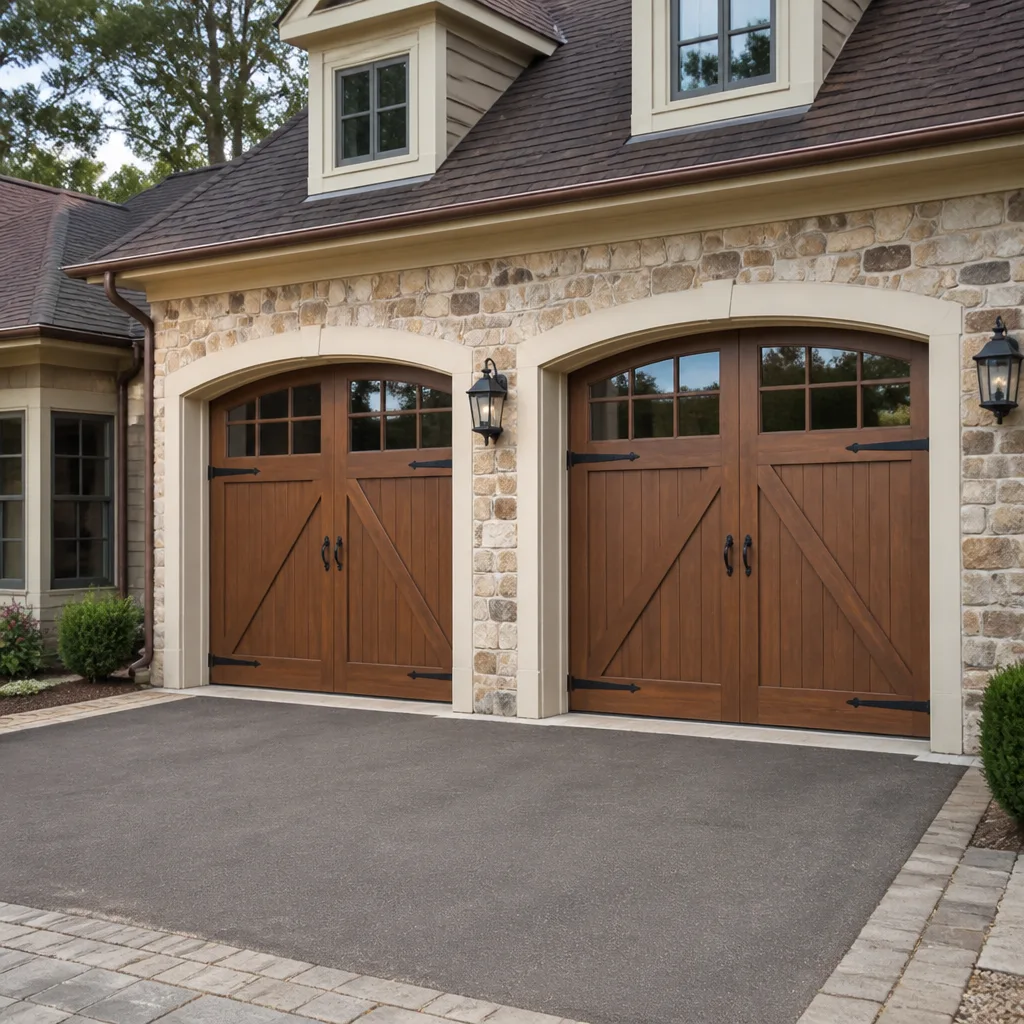 Carriage house
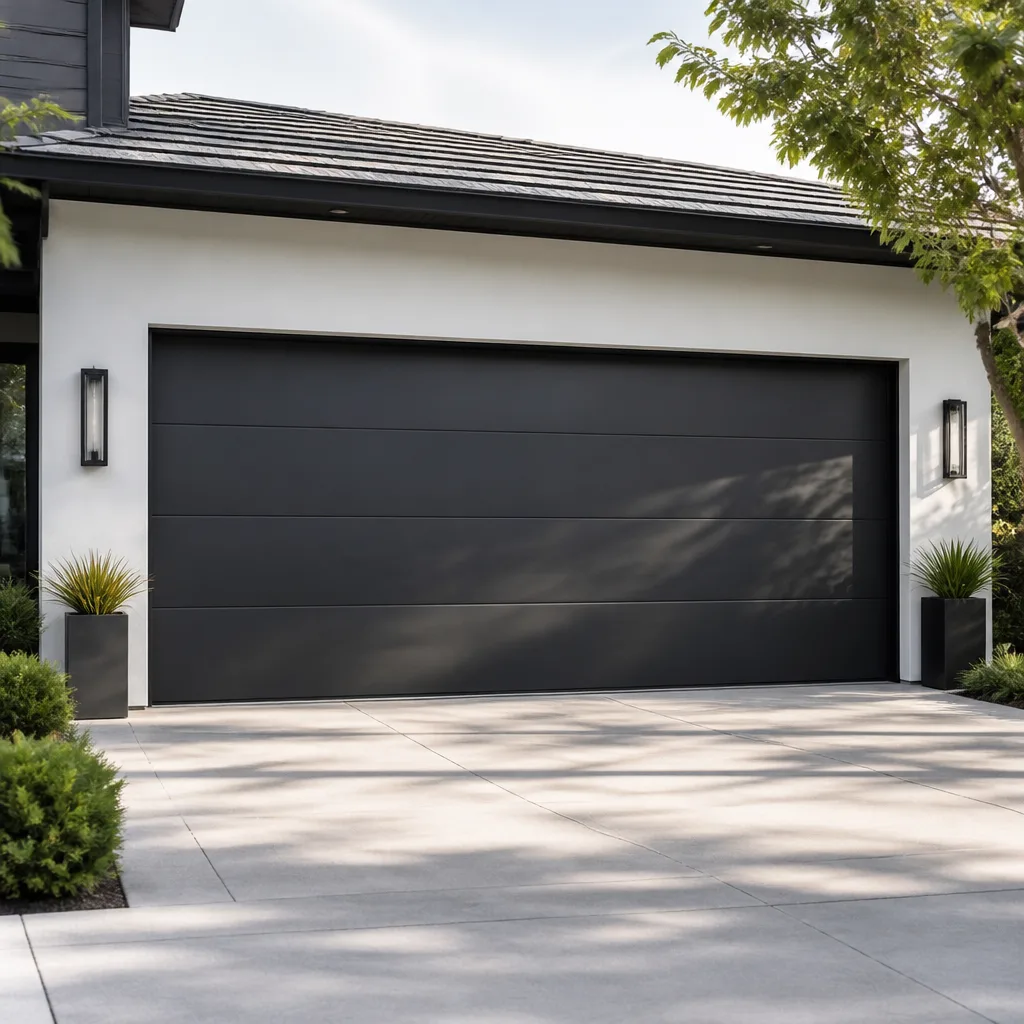 Modern flush
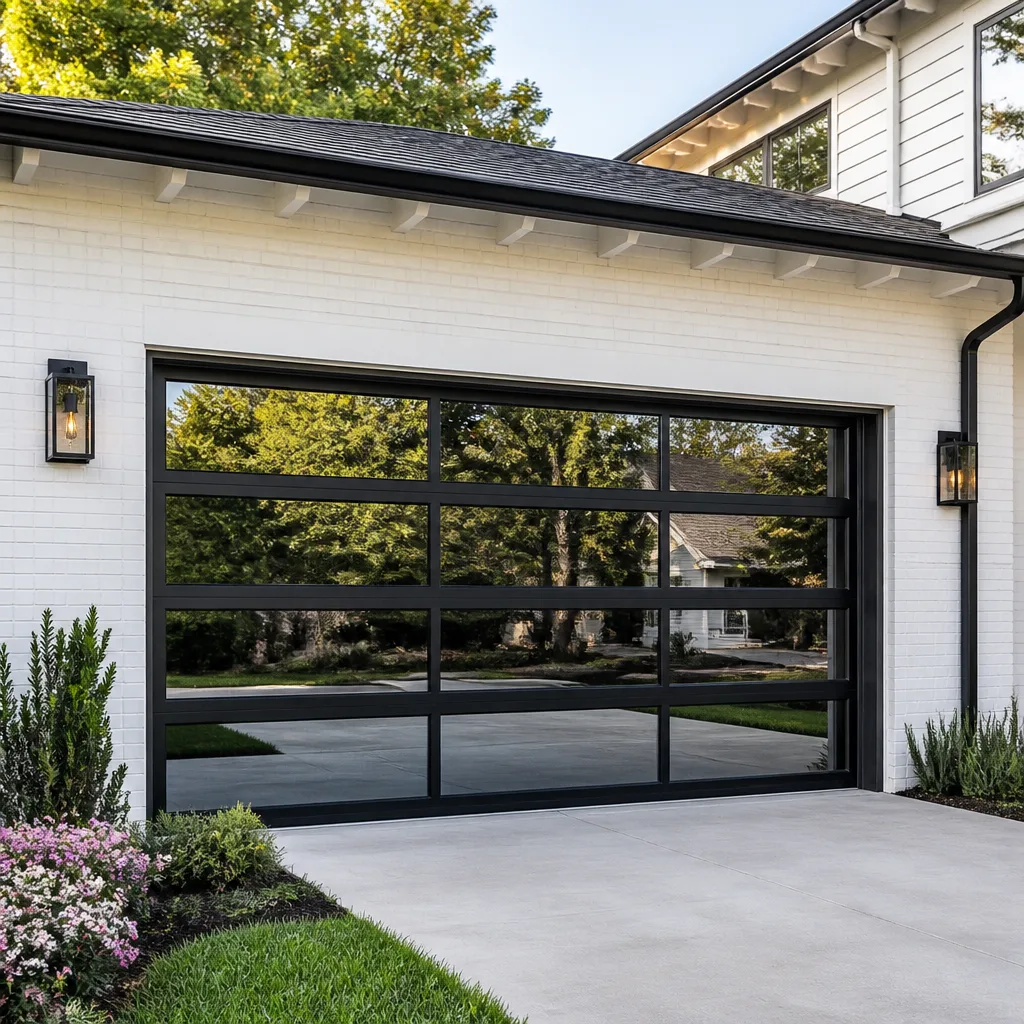 Full-view glass
 LiftMaster openers
 Chamberlain openers
Full 25-point door and opener safety check with every visit - springs, cables, rollers, tracks, and your LiftMaster or Chamberlain opener included
You get a price before we start. It does not change when the pro arrives.
Get your free estimateGarage Door Warning Signs: A Kingfield Homeowner’s Reference Guide
A garage door doesn’t snap, fall, or quit without notice. It telegraphs the failure for weeks through sounds and behaviors most homeowners have been trained to ignore. That grinding noise you’ve decided is “just how the door sounds”? It’s a bearing telling you it’s running dry. That uneven gap along the top panel? That’s a spring losing tension, not a quirk of the install. In this guide, we walk through the early-stage Kingfield warning signs that show up weeks before a breakdown, explain exactly which component is degrading, and tell you how fast you need to act. By the end, you’ll know what your door is actually saying.
Quick Answer
The most reliable early warning signs of garage door failure in Kingfield are new or worsening noises (grinding, squealing, popping), uneven gaps between panels or along the floor, a door that reverses slowly or unevenly on the way down, a door that lifts fine by hand but struggles on the opener, and visible rust streaking on the springs. Each of these points to a specific component – bearings, rollers, springs, sensors, or the opener’s force settings – and most give you weeks of lead time before a hard failure. Catching them early turns an emergency into a scheduled repair.
Styles & brands we work with
- Raised-panel steel
- Carriage house
- Modern flush
- Full-view glass
- LiftMaster openers
- Chamberlain openers
Table of Contents
- The Sound Diagnostic: What Each Noise Tells You
- Uneven Panel Gaps: A Spring Tension Signal
- Slow Reversal on the Way Down: The Safety Sensor Warning
- Works Fine by Hand, Struggles on the Opener
- The Rust Pattern That Predicts Spring Failure
- Opener Signals Homeowners Miss
- How Minnesota’s Seasons Accelerate Wear
- A Monthly Walk-Around Checklist
The Sound Diagnostic: What Each Noise Tells You
The noise your door makes is the most precise diagnostic tool you have, and it’s free. Different sounds come from different components, and each one tells you how urgent the problem is. In our experience across Kingfield, homeowners describe three main categories of noise, and each maps to a specific failing part.
Grinding is metal-on-metal contact, and it usually comes from one of two places: dry or worn torsion bearings at the ends of the shaft, or rollers whose bearings have seized and are now dragging along the track. A grinding door is actively damaging itself every time it moves. Left alone, a seized roller can score the track and turn a small fix into a track replacement. Weeks of grinding is normal; months of it is a bigger bill.
Squealing is high-pitched and often intermittent, appearing at certain points in the door’s travel. It typically points to rollers or hinges that have lost lubrication, or a torsion spring that’s rubbing. Squealing is usually the least urgent of the three, but it’s a clear signal that lubrication and inspection are overdue.
Popping is the one that deserves immediate attention. A sharp pop, especially when the door first starts to move, often means a torsion spring is winding and slipping – a spring on the edge of failure. Popping can also come from a cable jumping its drum. Both are safety issues. Stop using the door and call a professional.
Three quick rules for reading sound:
- Grinding means friction damage is happening now – schedule service within days.
- Squealing means wear is accumulating – schedule service within weeks.
- Popping means a high-tension component is failing – stop using the door and call today.
When a noise doesn’t fit neatly into these categories, that’s where garage door repair diagnostics come in – an experienced technician can usually identify the failing part within minutes of hearing the door cycle.
Uneven Panel Gaps: A Spring Tension Signal
Most homeowners assume uneven gaps between garage door panels are an installation quirk – something that was always there and isn’t worth worrying about. In most cases, that’s wrong. Uneven gap spacing, especially when it develops or changes over time, is one of the clearest early signals that the springs are no longer lifting the door evenly.
A garage door is a balanced system. The springs are tuned to the door’s weight so the opener only needs to guide the door, not lift it. When one spring weakens before the other (common with torsion setups), or when a spring’s tension drifts with temperature swings, the door rises unevenly. One side goes up faster than the other, and the panels shear slightly out of alignment. You see it as a gap that’s wider on one end of the door than the other, or a horizontal seam that isn’t parallel to the floor.
Why is this a spring signal and not an install quirk? Because a properly installed door starts even and stays even until a component changes. If the gap is new, widening, or inconsistent day to day, something in the lift system has shifted. Weather doesn’t create gaps; mechanical change does.
Watch for these variations:
- A gap that’s wider at one end of the door than the other. Points to unequal spring tension left to right.
- A gap along the top that wasn’t there a few months ago. Often means sagging torsion springs or a stretched extension spring.
- A gap that appears and disappears with weather changes. Indicates a spring near the edge of its tolerance, shifted by thermal expansion.
- Panel seams that don’t line up horizontally. Signals the door is no longer riding level in its tracks.
None of these are emergencies on their own, but they’re early-stage signals. Caught early, a spring issue is a scheduled repair. Caught late, it’s a snapped spring and a door stuck in the down position at the worst possible time.
Slow Reversal on the Way Down: The Safety Sensor Warning
A modern garage door has two safety systems: photoelectric sensors near the floor that detect an obstruction, and a force-setting in the opener that reverses the door if it meets resistance. Both are designed to protect anything in the door’s path. When the door starts reversing slowly, hesitating, or only reversing after contact, one of these systems is telling you it’s compromised – and that’s before it becomes a real safety risk.
Slow reversal usually means the safety sensors are misaligned, dirty, or receiving weak signals. Dirt on the lens, a spider web between the sensor eyes, or a lens nudged a few millimeters off-axis can all cause hesitation. The door still closes, which is why homeowners dismiss it. But the same sensor trouble that causes slow reversal can eventually cause the door to close on an obstruction.
The force setting is the second half of the story. Every opener is calibrated to sense a certain resistance before it reverses. Aging springs, worn rollers, and a door that’s running heavier than it used to all increase that resistance. When the opener feels more resistance than it expects, it hesitates – it’s trying to decide whether the resistance is an obstruction or just the door being heavy. Over time, the safety margin erodes.
Here’s the sequence to check:
- Look at the sensor lights on both units near the floor – each should glow steadily. A blinking or dark light is a misalignment or power issue.
- Wipe the sensor lenses with a soft dry cloth and check again.
- With the door open, break the sensor beam with your hand. The door should not close while the beam is blocked.
- If the door still closes with the beam broken, stop using the door and call a professional immediately.
Do not attempt to recalibrate the force setting yourself. On most modern openers, it’s a dial or digital setting that must be tuned to within close tolerance. Get it wrong in the sensitive direction and the door becomes a hazard; get it wrong in the other direction and the door reverses for no reason. This is one of the calls we handle most often for LiftMaster and Chamberlain systems in Kingfield, and it’s usually a quick fix once diagnosed.
Works Fine by Hand, Struggles on the Opener
Here’s a diagnostic homeowners often miss: disconnect the opener (most have a red manual release handle) and lift the door by hand. If the door rises smoothly and easily, but struggles, grinds, or stalls on the opener, that difference tells you exactly which side of the system the problem is on.
A door that lifts fine by hand but struggles on the opener is signaling motor strain, not mechanical friction. The lift system – springs, cables, rollers, tracks – is intact enough to move the door manually. The problem is that the opener isn’t getting the help it needs from the springs, or the opener itself is weakening. When the springs aren’t carrying the door’s weight properly, the opener has to lift more than it was designed to. Its motor runs hotter, the gears wear faster, and eventually the drive fails.
A door that’s hard to lift by hand, or that won’t stay up when you let it go halfway, is signaling mechanical friction or spring failure. This is the more serious of the two. If the door won’t hold itself up, the springs are no longer tuned to the door’s weight. Using the opener in this condition forces the motor to compensate, and something in the chain is going to break.
The release test is best done with these rules in mind:
- Do the test with the door fully closed and the opener disconnected. Lift with both hands on the bottom edge, slowly.
- A properly balanced door should lift with one hand and stay in place at any height once you stop.
- If lifting takes real effort, or the door drops when you let go, don’t re-engage the opener – call a professional.
- If the door lifts easily but the opener still struggles, suspect the opener, its drive gear, or the force settings.
For opener problems, our garage door opener repair service covers the full lineup of residential systems, including the electronics and drive systems on Genie, LiftMaster, and Craftsman units.
The Rust Pattern That Predicts Spring Failure
Springs don’t fail on a schedule. They fail when their cross-section thins enough that the remaining metal can’t hold the torsion. Rust accelerates that thinning, and Minnesota humidity is very good at producing it. What most homeowners don’t realize is that the pattern of the rust on a spring tells you roughly how far from failure you are – weeks or months – not just that it’s rusting.
Light, even surface rust across the whole spring is early-stage. It’s not a same-week failure, but it’s a signal to plan a spring replacement in the coming months rather than waiting for the snap. This is the pattern where homeowners have the most flexibility to schedule.
Focused rust concentrated at the coils’ contact points, with pitting or flaking is mid-stage. The cross-section is genuinely thinning at those points. Plan for service in the next few weeks – don’t push it another season.
Deep pitting, flaking metal, or rust over a visibly narrowed coil is late-stage. The spring is close to failure, and a snapped torsion spring is not something to test. Stop using the door and call for spring repair.
Minnesota makes this worse in two ways. The humidity spikes in summer, keeping the springs wet for longer. And the temperature swings between seasons – warm days and cold nights in spring and fall – cause the springs to cycle through expansion and contraction, which flexes the metal and opens up tiny rust pockets faster than in a milder climate. In Kingfield specifically, we see spring rust progress noticeably faster in doors that face south and sit in the sun for most of the day, because the constant thermal cycling works the metal harder.
Spring repair is one of the most technically demanding parts of the trade, and it’s where the difference between a generalist handyman and a specialist shows. A torsion spring under tension stores enough energy to cause serious injury if handled wrong. This is not a repair to attempt on a Saturday afternoon. Our team handles spring replacement with the safety procedures and tooling that it takes, on the door you already have – Garage Door Repair Kingfield is set up to cover spring repair, cables, and the opener side of the system in one visit.
Opener Signals Homeowners Miss
The opener is the brain of the system, and it usually gives several weeks of warning before it fails outright. The trouble is that most of those signals are easy to rationalize as quirks or remote-control problems. Here’s what actually matters.
The door works from inside but not from the car usually means a remote issue, not an opener failure. Replace the remote battery, then check whether the issue is one remote or all of them. If all remotes fail, the receiver or logic board in the opener is failing.
The door works only when you’re close points to a weakening receiver in the opener – the same component aging out. On older Craftsman and Wayne Dalton units, the receiver board is often the first electronic part to go.
The opener runs but the door doesn’t move is a stripped drive gear or a broken belt/chain. That’s a mechanical opener failure, not a motor one, and it’s usually fixable without replacing the whole unit.
The opener beeps, flashes, or resets itself is usually the logic board detecting a fault. It can also indicate that the force settings are being tripped by a heavy door – which is where the opener and the lift system connect. Fix the door’s balance and the opener fault often goes away.
One thing to check on any opener before assuming it’s dead: the wall control. A stuck or failing wall button will make the opener act like it’s failed when the unit is fine. This is a common false alarm in Kingfield homes, and it’s worth ruling out before a service call.
How Minnesota’s Seasons Accelerate Wear
The same door that lasts ten years in a mild climate often needs service in half that time in Minnesota, and it’s not the cold itself that does the damage – it’s the transitions. Our spring in Kingfield swings from twenty degrees to sixty within days, and those swings are harder on a garage door than a sustained cold snap.
Fall and spring are the seasons when thermal expansion and contraction put the most stress on springs, hinges, and tracks. Doors that ran quiet all summer start to grind or squeal as lubricant thins and metal shifts. This is when most early-stage warning signs first appear.
Winter brings frozen tracks, cracked rollers, and door panels that stiffen enough to feel heavier. Snow and ice packed under the door on a bad morning can trigger force-setting trips on the opener. It’s also when a spring that’s been failing all fall finally gives out, often because the cold has stiffened the grease in the torsion bearings.
Summer in Kingfield is humid enough that springs rust faster, and the heat softens lubricant to the point that doors run quieter on their own than they do in cooler months. That’s often how a spring that’s been quietly degrading goes unnoticed all summer – the door sounds fine because the metal is warm and greasy.
A door that sounds different in October than it did in July is telling you something. The right time to book service is when the sound first changes, not when the door stops working.
A Monthly Walk-Around Checklist
Fifteen minutes once a month is enough to catch nearly every early-stage warning sign on this list. Here’s the routine we suggest for Kingfield homeowners, and it’s what we go through on our own reference walks.
- Listen on the way up and on the way down. Any new grinding, squealing, or popping is a signal – note which direction it happens and whether it changes.
- Look at the gaps. Stand inside the garage and look at the seams between panels, and at the gap along the floor. Are they even? Has the pattern changed?
- Check the springs. Look for rust, and note whether it’s light and even or focused and pitted. Don’t touch the springs.
- Test the safety sensors. Break the beam with your hand. The door should not close while the beam is broken. If it does, stop using the door.
- Do the manual release test. Disconnect the opener and lift the door by hand. It should lift easily and stay where you leave it.
- Check the tracks, cables, and rollers. Look for bent track, cables that are frayed or jumping their drum, and rollers that are flat-spotted or cracked. Never touch a cable under tension.
- Watch the opener. Any hesitation, beeping, or flashing fault indicator is a signal to have the electronics checked.
Anything that shows up on this walk-around that you’re not sure about is worth a check. Our technicians have up to 10 years of experience reading these signals, and a short conversation often saves a full emergency call later.
Common Mistakes to Avoid
- Waiting for a hard failure to call. A door that’s grinding now will cost more to fix once it’s seized a roller or scored a track. The whole point of reading early signals is to avoid the bigger repair.
- Assuming uneven gaps are an install quirk. They aren’t. Gaps that develop or change point to a spring or track problem, and catching them early is what saves the door.
- Ignoring slow reversal on the way down. Dismissing it as a sensor quirk is the most common reason doors end up closing on an obstruction. Check the sensors and stop using the door if the beam doesn’t stop it.
- Spraying WD-40 on the springs or tracks. WD-40 is a solvent, not a lubricant, and it strips the grease a torsion spring needs. It also attracts grit that wears tracks. Use proper garage door lubricant, and only on rollers and hinges – not on the springs themselves.
- Adjusting the force setting to “fix” a struggling door. Increasing force is the wrong answer to a heavy door – it hides the spring problem and pushes the motor past its design. Fix the cause, not the symptom.
- Replacing the whole door when one part is failing. In most Kingfield homes, a slow door or a grinding door needs a new spring, a fresh set of rollers, or a new opener – not a new door. A proper diagnostic tells you which.
- Attempting a spring repair alone. Torsion springs are the most dangerous component on any garage door. A snapped spring under tension is not a DIY repair, and the tooling required is not something you can improvise.
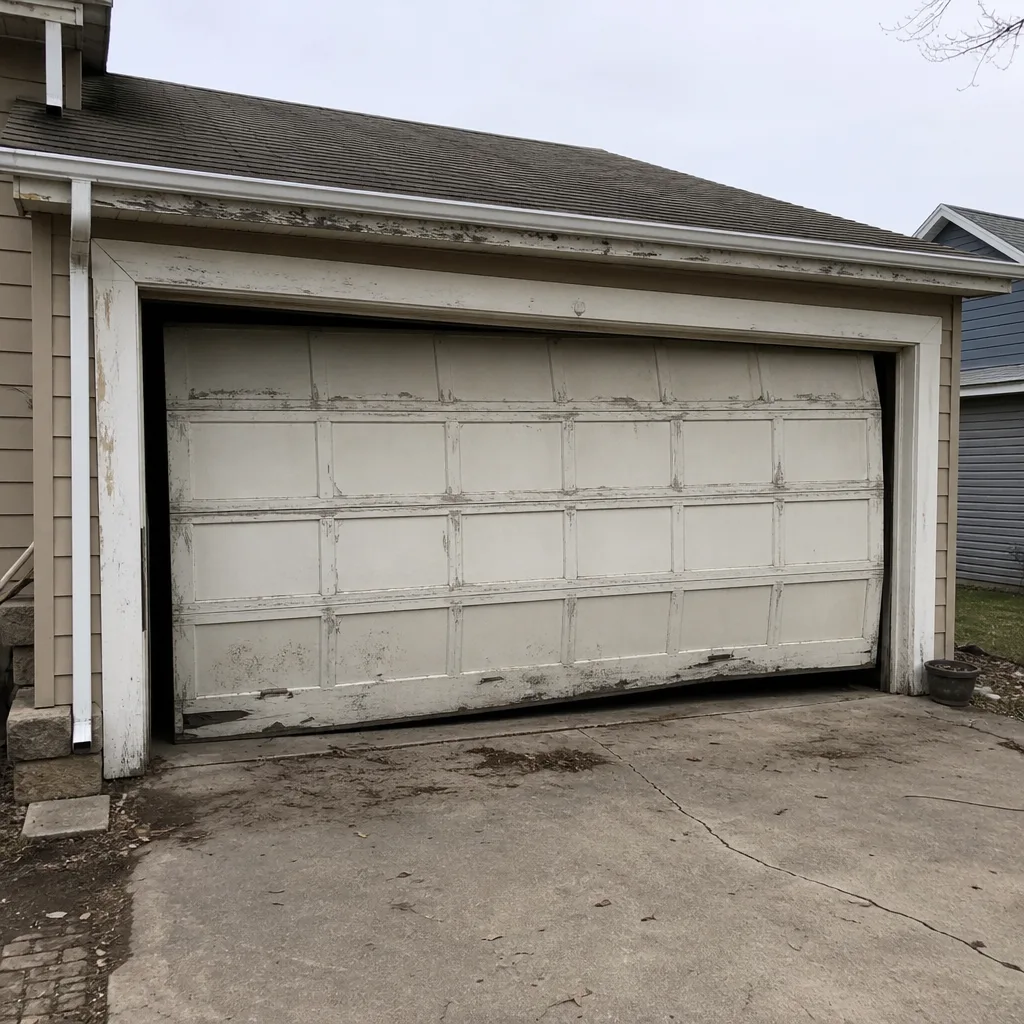
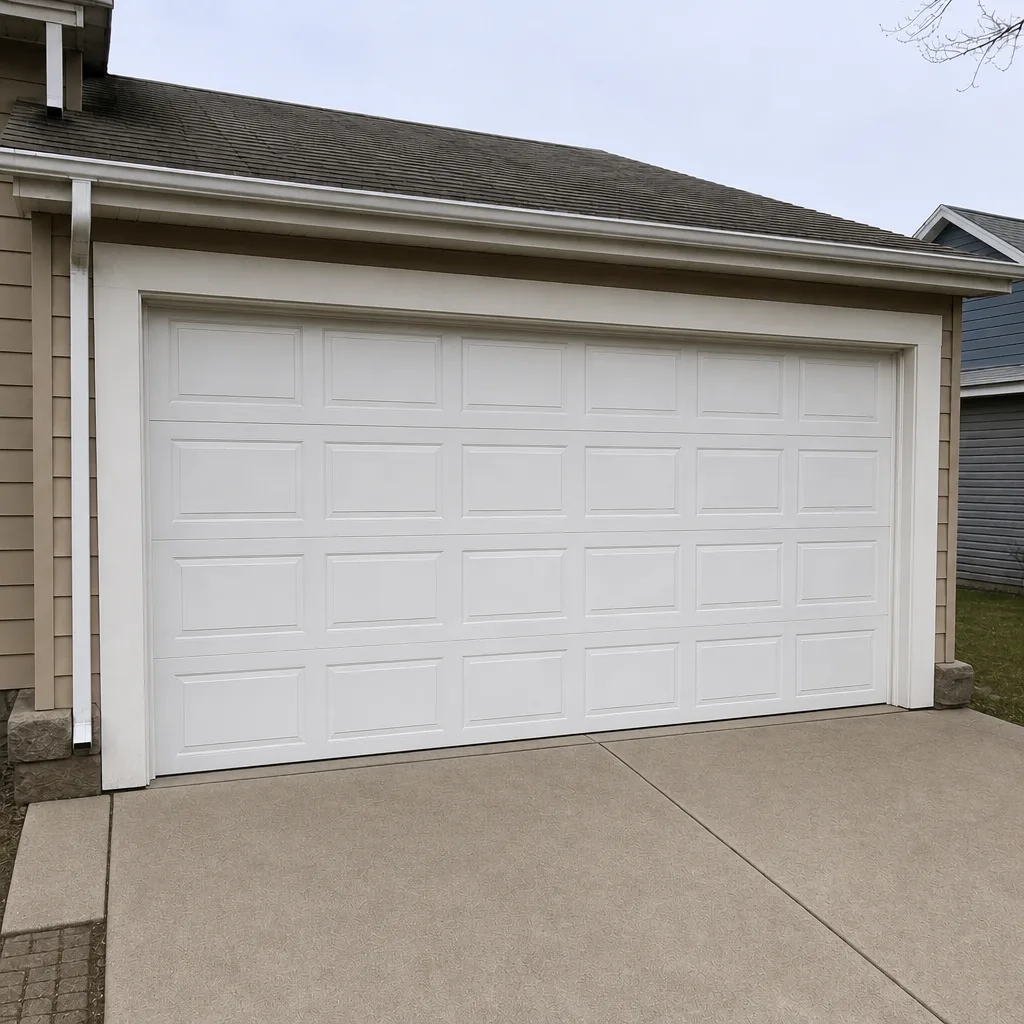
See the difference
 Before
 After
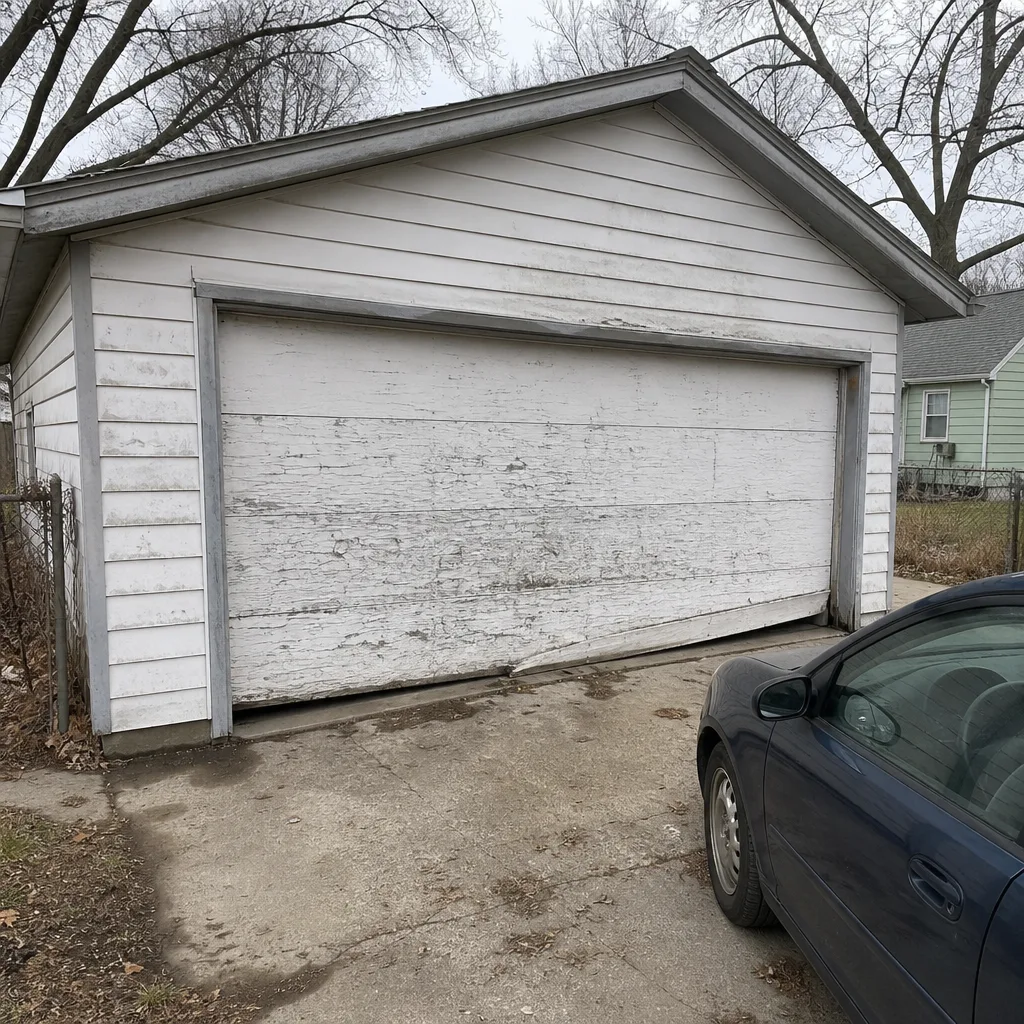 Before
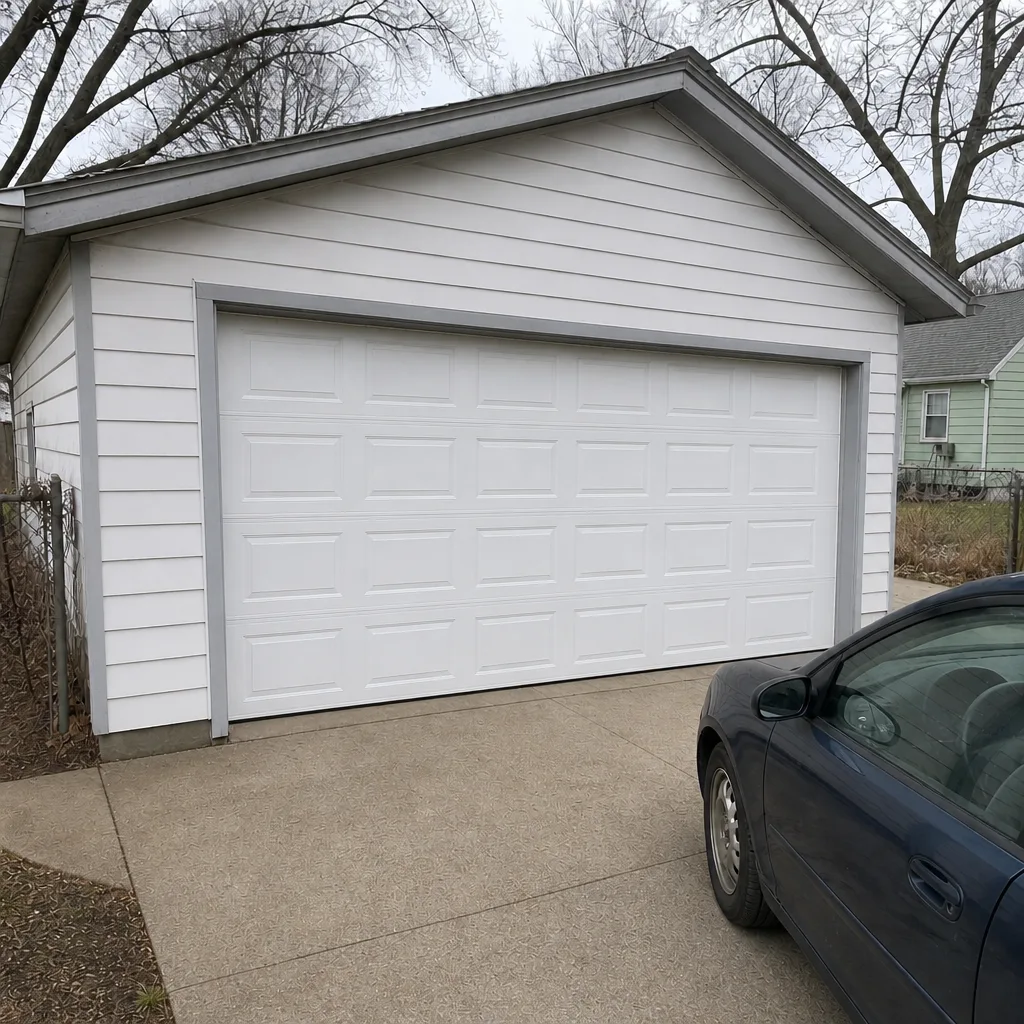 After
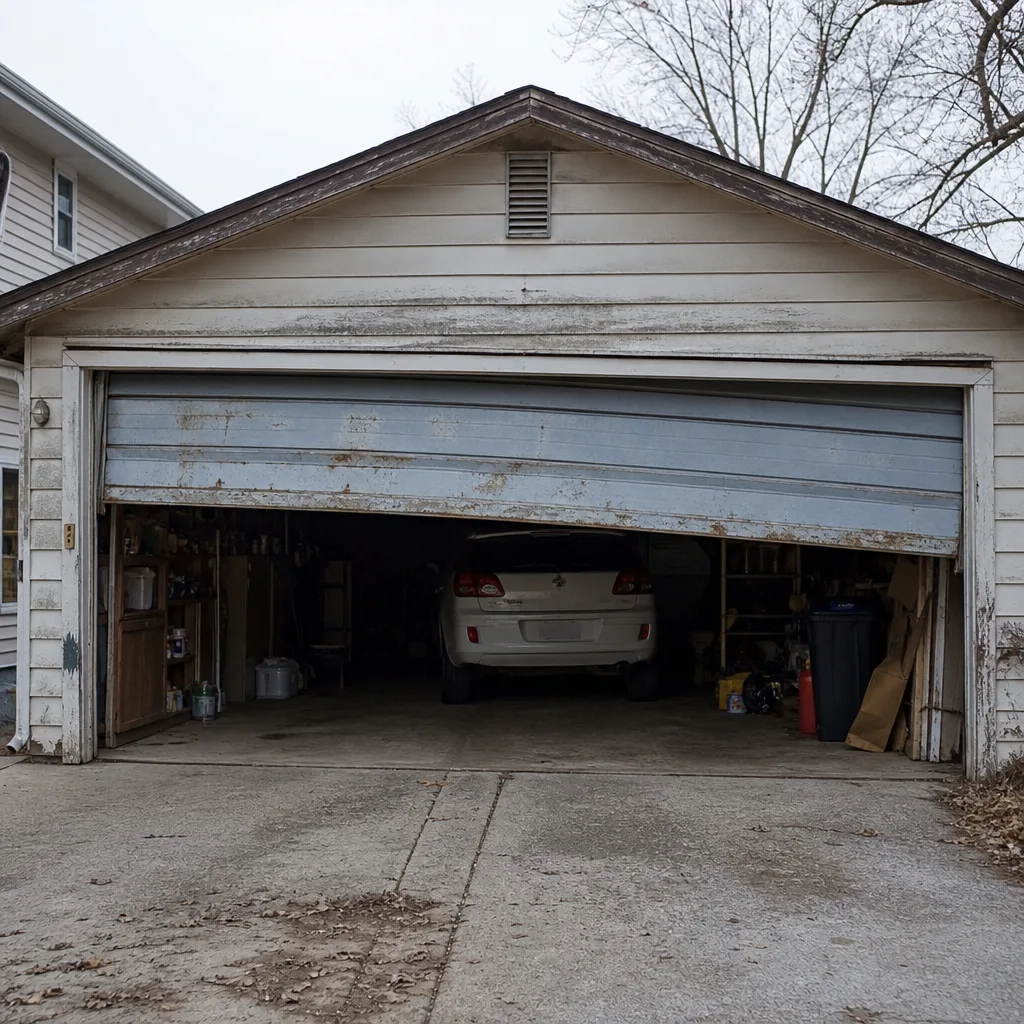 Before
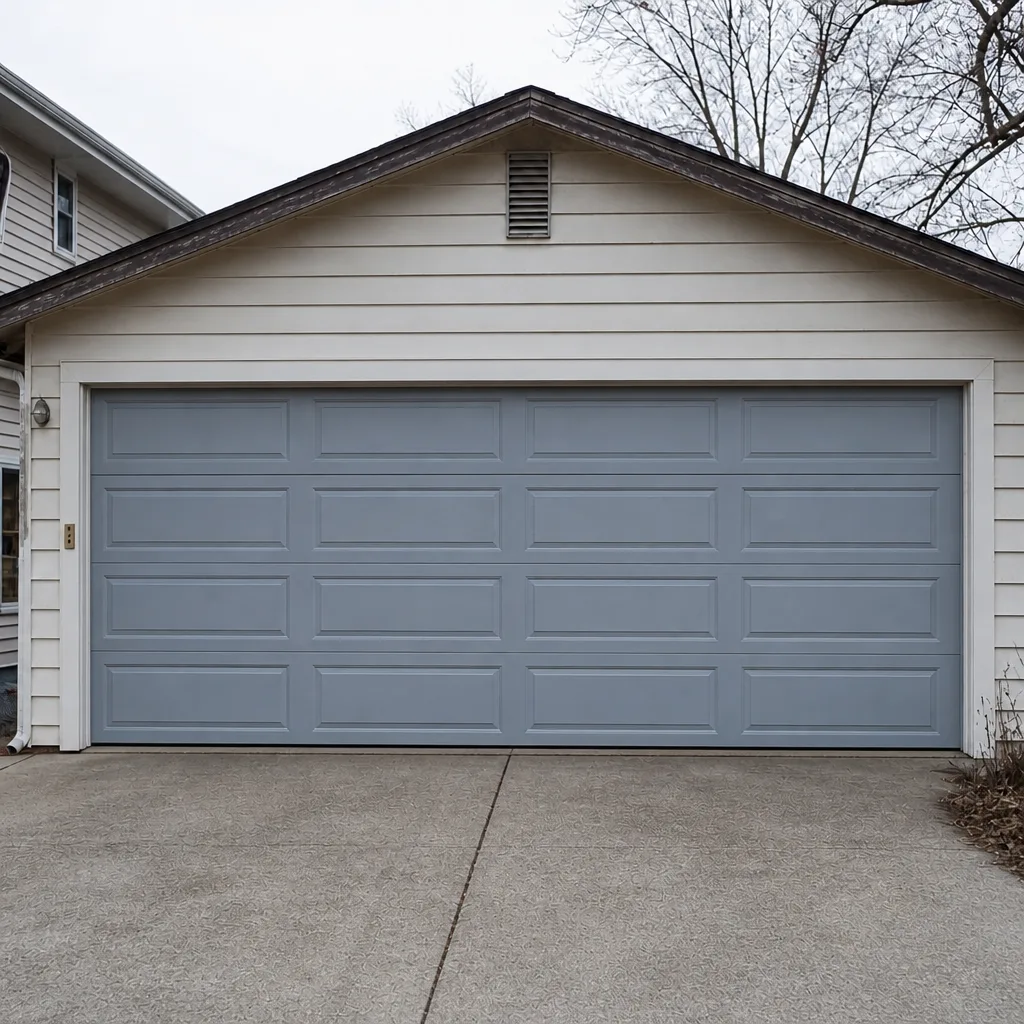 After
When to Call a Professional
Some warning signs are a scheduled repair, and some are a call today. If your door is popping, if the safety sensors don’t stop the door when you break the beam, if the door won’t hold itself up when you release the opener and lift it by hand, or if you see deep pitting and flaking on the springs, stop using the door and call us. Grinding, slow reversal, and uneven gaps are less urgent but should be booked within days or weeks – not pushed to next season. When the door won’t move, we will. Our emergency garage door service covers Kingfield situations that can’t wait for a next-day appointment. Garage Door Repair Kingfield offers free estimates in Kingfield – call (877) 492-3659.
Frequently Asked Questions
New or worsening noise during the door’s travel – usually grinding from dry bearings or scealed rollers, or squealing from unlubricated hinges – is the most common early sign we see in Kingfield. Because it develops slowly, most homeowners dismiss it as “just how the door sounds” for weeks before it becomes an emergency. Call (877) 492-3659 for an exact quote – estimates are free.
It depends on the rust pattern. Light, even surface rust typically gives you months of lead time to schedule a replacement. Focused rust with pitting at the contact points usually means weeks. Deep pitting and flaking metal means the spring is close to failure and should be replaced before the door is used again. When in doubt, call (877) 492-3659 for a check.
A door that lifts easily by hand but struggles on the opener is signaling motor strain, not mechanical friction. The springs aren’t carrying the door’s weight the way they should, so the opener is doing more lifting than it was designed for. That wears out the drive gear and eventually fails the motor. This is fixable – call (877) 492-3659 to get it diagnosed.
Yes. Emergency garage door service is a core part of what we do in Kingfield – it’s not an add-on. If your door won’t open, won’t close, or has a snapped spring, call (877) 492-3659 and we’ll book you in.
Slow reversal usually means the safety sensors are misaligned or dirty, or the opener’s force setting is marginal because the door is running heavy. Both need attention – the safety sensors specifically because the same issue that causes hesitation can eventually cause the door to close on an obstruction. If the door closes with the beam broken, stop using it and call (877) 492-3659.
No. We quote and agree on the price before any work starts, and the written quote is the price. If a diagnostic finds that the original quote needs to change once we see the actual failure – say, a roller issue turns out to be a track problem – we come back to you with the revised quote and get your approval before continuing. Call (877) 492-3659 for a free estimate.
The Bottom Line
A garage door tells you when it’s failing – the trouble is that most homeowners have learned to ignore the signals. The five to watch in Kingfield are new noises (grinding, squealing, popping), uneven panel gaps that develop over time, slow reversal on the way down, a door that lifts fine by hand but struggles on the opener, and rust patterns on the springs that tell you weeks vs. months. Catch any of them early and you’re looking at a scheduled repair. Miss them and the same problem becomes an emergency. If you’re not sure what your door is saying, we can read it. Our technicians have up to 10 years of experience, and we’re set up across the major brands – LiftMaster, Chamberlain, Genie, Clopay, Amarr, Wayne Dalton, Craftsman, and Raynor – as well as the full scope of garage door installation. When something needs attention, call (877) 492-3659 for a free estimate.
Written by the team at Garage Door Repair Kingfield.