Last updated November 21, 2026
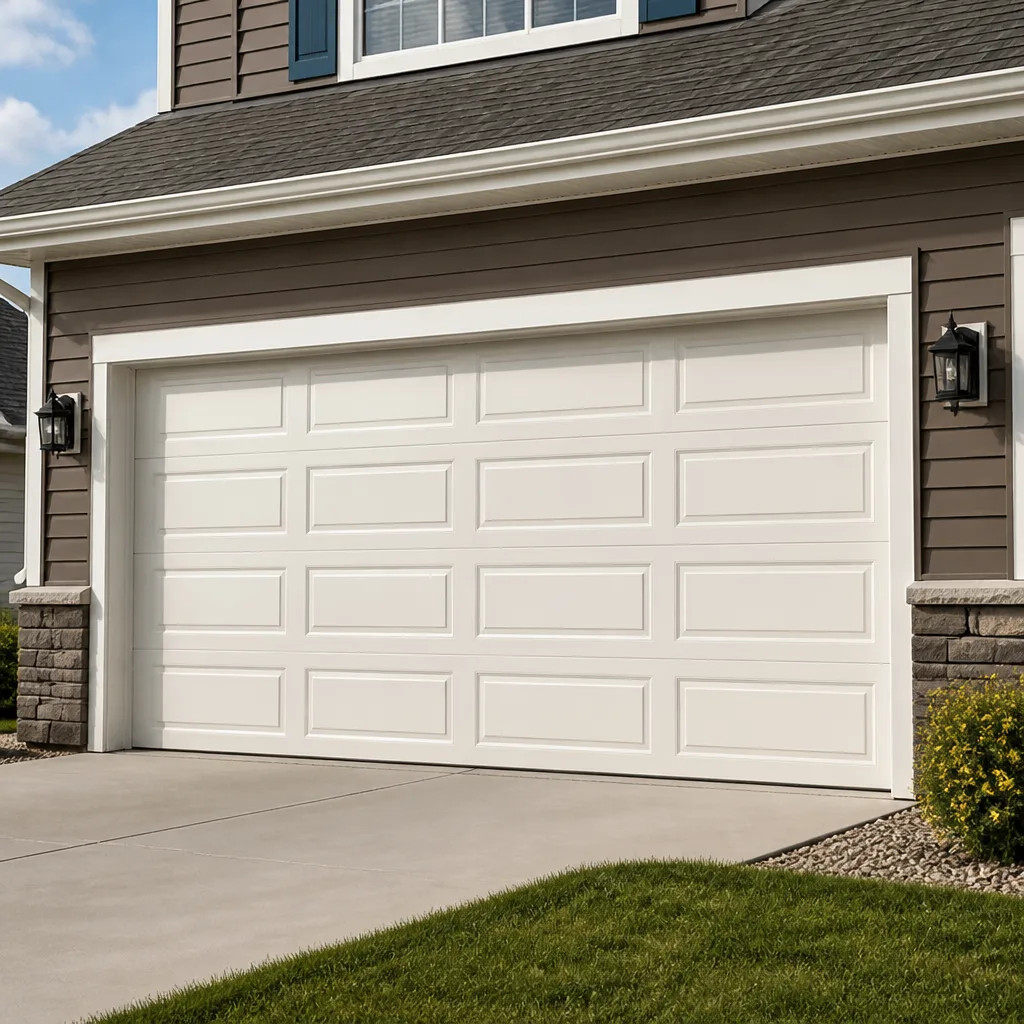 Raised-panel steel
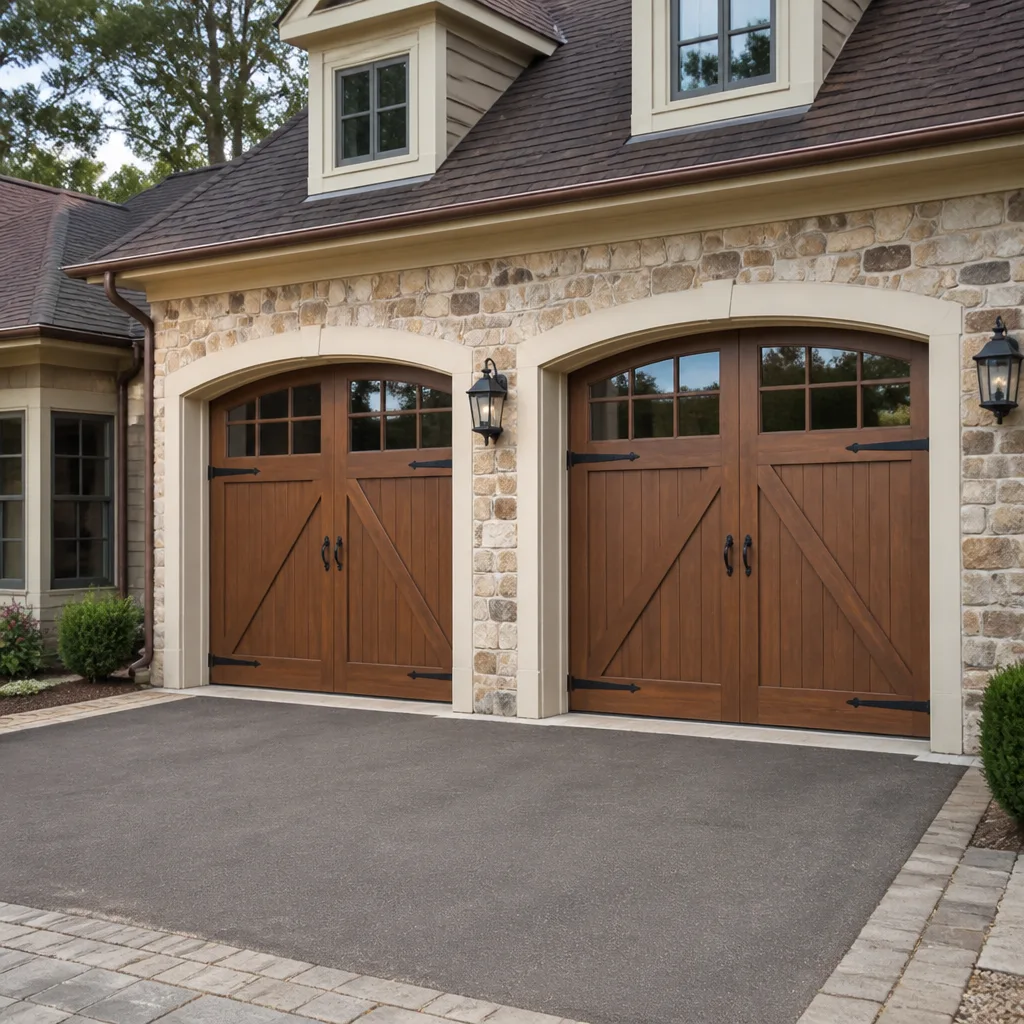 Carriage house
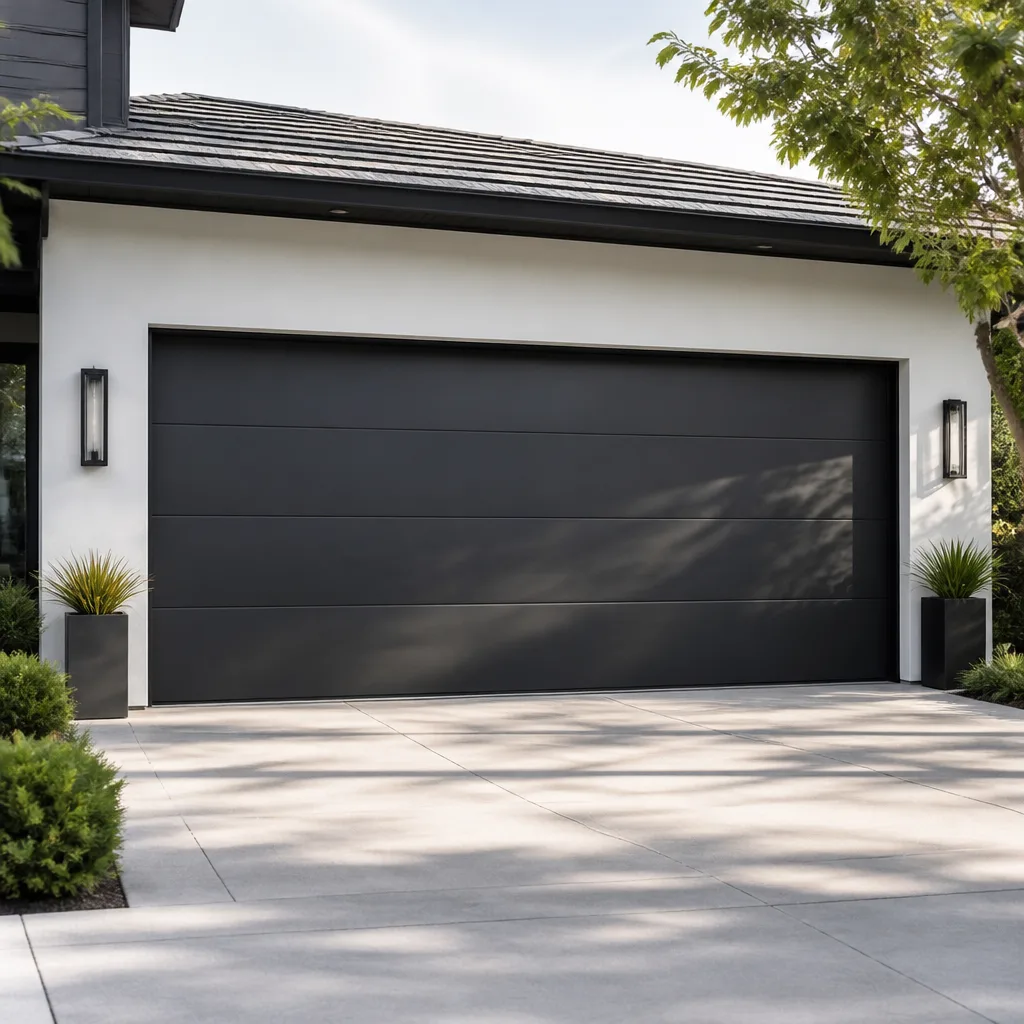 Modern flush
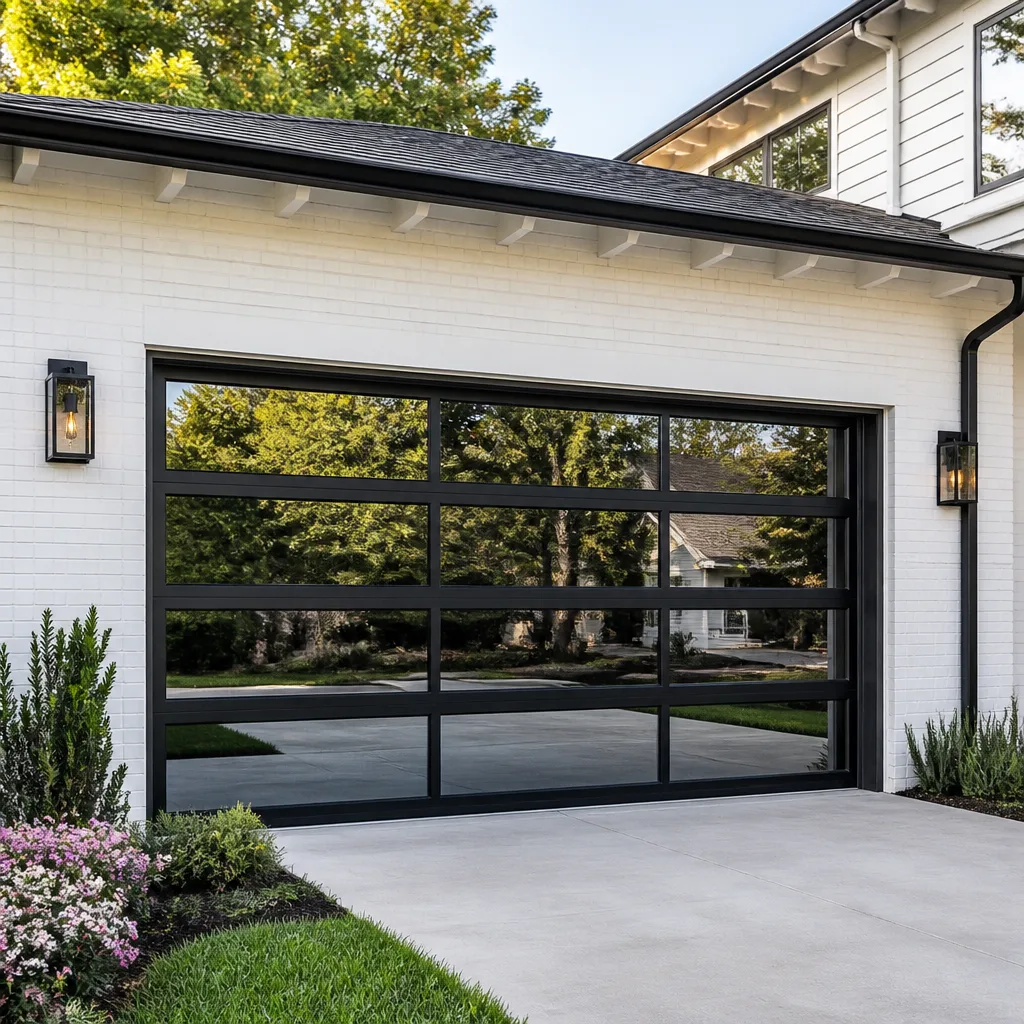 Full-view glass
 LiftMaster openers
 Chamberlain openers
Full 25-point door and opener safety check with every visit - springs, cables, rollers, tracks, and your LiftMaster or Chamberlain opener included
You get a price before we start. It does not change when the pro arrives.
Get your free estimateGarage Door Cost Breakdown: The Kingfield Homeowner’s Reference for 2026
Two quotes land in your inbox for the same snapped spring. One says $189. The other says $340. Both contractors sound reasonable on the phone, both promise to finish in an afternoon, and neither quote explains why the numbers differ by nearly a hundred and fifty dollars. So most homeowners default to the lower number and assume they got a deal. Sometimes they did. Sometimes they paid for a lighter spring, a shorter warranty, or a technician who’ll be back in eighteen months for the same repair. This guide gives you the framework to tell those cases apart. We’ll walk through what parts actually cost in 2026, why rural Minnesota service calls carry a real premium, and which line items on a quote reveal fair pricing versus padding. If you live in Kingfield or anywhere in the surrounding rural counties, this is the reference you’ve been missing.
Quick Answer
Garage door repair in Kingfield typically runs $150 to $450 for common fixes like spring replacement, cable repair, or opener service, while a full new door installation lands between $1,200 and $4,500 depending on insulation, gauge, and hardware grade. The biggest reason two quotes for the same job differ is the parts spec and the labor standard behind them, not the hourly rate. A written estimate that itemizes parts, labor, and warranty should always be agreed before any work starts, and that agreed price is what you pay.
Styles & brands we work with
- Raised-panel steel
- Carriage house
- Modern flush
- Full-view glass
- LiftMaster openers
- Chamberlain openers
Table of Contents
- Parts Cost vs. Labor Cost: Where Your Money Actually Goes
- The Five Most Common Repairs and What They Cost in 2026
- Why Rural Minnesota Service Calls Cost More Than Metro Quotes
- Single Spring vs. Dual Spring Replacement: The Real Cost Difference
- How Insulation, Gauge, and Hardware Create $800 Swings in Installation Quotes
- The Three Line Items That Reveal Fair Pricing
- How Minnesota Winters Shape Garage Door Costs in Kingfield
- How to Compare Quotes Without Getting Burned
Parts Cost vs. Labor Cost: Where Your Money Actually Goes
Most garage door quotes bundle parts and labor into a single number, which is exactly why they’re so hard to compare. When you separate them, the picture gets clearer. In our experience across the Kingfield area, labor usually represents 55 to 70 percent of a repair quote, with parts making up the rest. That ratio shifts depending on the job. Spring replacement leans heavier on labor because of the safety equipment and training involved. Opener repair leans heavier on parts because the circuit board or drive gear is the expensive piece.
Here’s how the split typically breaks down for a standard residential job in 2026:
- Torsion spring (one): $40 to $90 in parts, $110 to $250 in labor. The labor covers winding bars, safety procedures, and the balancing test that follows.
- Extension spring pair: $25 to $60 in parts, $90 to $180 in labor. Less technical than torsion but still requires proper tensioning.
- Lift cables: $15 to $40 per cable in parts, $80 to $150 in labor. Cables under tension are dangerous and need a trained hand.
- Rollers (set of 10 or 12): $20 to $50 in parts, $60 to $120 in labor. One of the lower-risk repairs on the list.
- Opener motor or logic board: $80 to $220 in parts, $100 to $200 in labor. Brand-specific parts for LiftMaster and Chamberlain units vary widely in cost.
When a quote comes in well under the range for a given repair, one of two things is happening. Either the contractor is using a lighter-grade part, or the labor line is hiding something. Neither is automatically a scam, but both deserve a question. If you want the full picture on how these repairs are handled, our garage door repair page breaks down the diagnostic process. The key point is this: ask for a parts-and-labor breakdown in writing, and compare like for like.
The Five Most Common Repairs and What They Cost in 2026
These are the five jobs we field most often in Kingfield and the surrounding townships. The ranges below reflect typical 2026 pricing for a standard single-car or two-car residential door. Your final price depends on door size, brand, and access, and the written estimate you receive sets the final number.
1. Spring Replacement
Springs are the highest-tension component on any garage door and the most common failure point. A single torsion spring replacement typically runs $150 to $340. If your door uses a matched pair, both springs usually get replaced together, so a pair costs roughly twice a single spring. Extension springs run slightly cheaper at $120 to $240 for a pair. Never attempt this repair yourself; the stored energy in a wound spring can cause serious injury.
2. Cable Repair
Frayed or snapped lift cables usually cost $150 to $300 to replace, often bundled with spring work since the two wear together. Cables under tension are dangerous to handle without proper tools.
3. Opener Repair
Opener issues range from $120 to $350 depending on the fault. A stripped drive gear is on the low end; a failed logic board on a LiftMaster or Chamberlain unit sits higher. Our garage door opener repair service covers the full electronics and drive system, not just the obvious parts.
4. Roller and Hinge Replacement
Worn nylon rollers and hinges produce that grinding noise homeowners describe as “the door is dying.” A full roller set swap typically runs $100 to $200, including labor. This is one of the best value repairs on the list.
5. Panel Replacement
A dented or cracked section can often be swapped without replacing the whole door. Cost depends heavily on the manufacturer. Clopay and Amarr panels are common in this region, and a single-section replacement typically runs $250 to $600 depending on the model and finish.
Across all five, the pattern holds: parts are rarely the biggest line. Labor, safety equipment, and the technician’s time are what you’re mostly paying for, and that’s a good thing. It means the person handling a wound spring knows what they’re doing.
Why Rural Minnesota Service Calls Cost More Than Metro Quotes
A homeowner in Kingfield who calls a Twin Cities contractor for a quote will often hear a number $50 to $100 lower than what a local outfit quotes. That difference isn’t gouging; it’s logistics. Rural service calls carry a legitimate premium for three reasons, and understanding them helps you judge whether a quote is fair.
Travel time. A technician driving out to Kingfield from a metro hub loses 45 to 90 minutes round-trip that could have been spent on another job. That time gets priced into the call, whether the contractor itemizes it or not. Local providers absorb less of that cost because their whole service area is close.
Parts sourcing. Not every spring size, opener model, or panel color sits on a shelf in a metro warehouse. When a rural job needs a specific LiftMaster logic board or a Clopay panel in a less-common color, the part often gets ordered and shipped, adding a day or two and sometimes a shipping surcharge. Local contractors who work this region regularly learn which parts to keep on hand and which to order, which shortens the wait.
Route density. Metro contractors run dense routes and can batch several calls into a morning. Rural routes are thinner, so each call carries more overhead. That overhead appears in the quote as a slightly higher labor line, not as a hidden fee.
None of this means rural quotes are automatically fair. It means a $50 gap between a metro quote and a Kingfield quote is normal and expected. A $200 gap usually is not. If the spread is that wide, ask what’s different in the parts spec or the warranty, and get the answer in writing. Our Garage Door Repair Kingfield team prices jobs knowing the travel and sourcing realities of this region, so quotes reflect the real cost of doing the work here rather than a metro rate with a travel fee bolted on.
Single Spring vs. Dual Spring Replacement: The Real Cost Difference
Here’s a decision that trips up a lot of homeowners. Your door has two springs. One breaks. The technician quotes you two options: replace just the broken one for a lower number, or replace both for roughly double. The cheaper option almost always costs more over time, and here’s why.
Springs on the same door wear at nearly the same rate because they share the load and cycle count. When one fails, the other is typically close behind. Replacing only the broken spring means you’ll likely be paying for another service call, another labor charge, and another trip within a year or two. When you add those two separate visits together, the single-spring route usually comes out $40 to $80 higher than replacing the pair in one visit, even though the initial quote was lower.
There’s a second reason. A mismatched pair, where one spring is new and the other is old, throws off the door’s balance. The newer spring carries more of the load, which accelerates wear on both and can stress the opener. In our experience, mismatched springs are one of the most common causes of premature opener failure we see in Kingfield.
Our advice on this decision is straightforward:
- If both springs were installed at the same time and one breaks, replace the pair together.
- If the springs are visibly different ages or one was replaced recently, ask the technician to check the cycle count before deciding.
- Always ask whether the quote is for one spring or a pair. A range quoted without that distinction isn’t a quote; it’s a guess.
- Get the spring wire gauge and cycle rating in writing so you can compare quotes on equal footing.
Springs are the one repair where the lowest bid and the best value are most likely to point in different directions. That’s why spring repair is a named specialty in our trade, and why it’s worth asking any contractor how they handle matched pairs before you book.
How Insulation, Gauge, and Hardware Create $800 Swings in Installation Quotes
New garage door installation in the Kingfield area typically runs $1,200 to $4,500 for a standard residential door, installed. That’s a wide range, and the spread is real. Three variables account for most of it.
Insulation
An uninsulated steel door is the budget option. A polyurethane-insulated door with a higher R-value costs significantly more, and in a Minnesota climate the insulation matters for more than comfort. An attached garage that shares a wall with the house acts as a thermal buffer, and a poorly insulated door makes that buffer useless in January. Insulation alone can swing a quote by $300 to $600.
Door Gauge
Steel door gauge runs from 24-gauge (thinner, lighter, more prone to dents) up to 27-gauge and heavier commercial grades. Thicker steel costs more and holds up better against impact and wind load. A two-gauge step up can add $200 to $400 to the quote, and it’s usually worth it for a door that faces a driveway where kids play or cars park close.
Hardware Grade
Standard hinges, rollers, and brackets are fine for most homes. Upgraded hardware, sealed bearings, and heavier torsion springs add cost but extend the door’s service life. This is where a $200 gap between two otherwise similar quotes often lives, and where asking about the hardware spec tells you whether the lower quote is a fair deal or a corner cut.
When you’re comparing installation quotes, ask for the model number, the insulation R-value, the steel gauge, and the hardware spec in writing. A quote that names all four is a quote you can compare. A quote that says “standard steel door, installed” is a number waiting to change. Our garage door installation service starts with a free measure and a written price, so the number on the page is the number you agree to before any work starts.
The Three Line Items That Reveal Fair Pricing
You don’t need to be a contractor to spot padding on a quote. Three line items tell you most of what you need to know.
1. The Parts Line
A fair quote names the part, the brand, and the model or size. “Torsion spring, 2-inch, 250x2x28, pair” is a fair line. “Springs” is not. If a quote doesn’t specify what’s being installed, you can’t tell whether the price is high or the part is cheap. Ask for the spec, and if it’s refused, that’s your answer.
2. The Labor Line
Fair labor pricing reflects the actual time and skill required. A spring replacement that quotes two hours of labor at a reasonable rate is fair. A quote that folds labor into a mystery total and won’t break it out is harder to judge, and worth a second call. You’re not asking for the technician’s hourly wage; you’re asking what the job costs in labor so you can compare like for like.
3. The Warranty Line
A fair quote states what’s covered and for how long. Parts warranties and labor warranties are separate things, and a quote that only covers parts leaves you paying for the labor if the part fails early. Ask specifically: if this spring fails in a year, what do I pay? The answer tells you a lot about how confident the contractor is in their work.
If a quote is missing all three, it’s not a quote. It’s an estimate of a vibe. You deserve better, and in Kingfield you can ask for better without apology.
How Minnesota Winters Shape Garage Door Costs in Kingfield
Kingfield winters are hard on garage doors in ways that don’t show up on a generic price list. The freeze-thaw cycle, road salt tracked onto the door and tracks, and the sheer number of open-close cycles during a cold snap all accelerate wear. Homeowners here often see spring failures and opener strain concentrated in the coldest weeks, which is exactly when you least want to be dealing with a door that won’t close.
A few cost implications worth knowing:
- Cold-weather opener strain. A door that binds slightly in summer can stall completely at ten below zero. A pre-winter tune-up is cheaper than an emergency repair in January, and it’s the single best way to avoid a mid-winter breakdown.
- Lubrication matters more here. Cold thickens grease and stiffens rollers. A proper cold-weather lubricant on springs, hinges, and rollers is a small cost that extends the life of the whole system.
- Insulation pays back faster. A well-insulated door keeps the attached garage warmer, which reduces condensation on the door and tracks and slows corrosion. That’s a real cost saver over the life of the door, not just a comfort upgrade.
- Emergency calls cluster. When a cold snap hits, everyone’s door fails at once. Booking a repair before the deep freeze is cheaper and faster than competing for an emergency slot once the temperature drops.
Emergency service is a real offering here, not an upsell. When a door won’t open or close and you’re stuck, you can call and get a technician scheduled. Our hours are Sunday through Friday, 7am to 7pm, and we’re closed Saturday. The best cost strategy, though, is to never need the emergency call in the first place. A seasonal check in the fall goes a long way in this climate.
How to Compare Quotes Without Getting Burned
Comparing garage door quotes is mostly about asking the right questions in the right order. Here’s a process that works whether you’re facing a repair or a full replacement.
- Get everything in writing. A verbal quote is a starting point, not a commitment. Ask for the estimate by text or email so you can compare side by side.
- Ask for the parts spec. Brand, model, gauge, R-value, spring size. If it’s not named, it’s not comparable.
- Ask whether the quote is for one spring or a pair. This is the single most common source of apples-to-oranges comparison in this trade.
- Ask about the warranty. Parts and labor, separately, with the duration stated.
- Confirm the price is agreed before work starts. Any reputable contractor will put the final number in writing and stick to it unless you approve a change.
- Check that the technician is equipped for your brand. A LiftMaster opener and a Genie opener have different electronics. A brand-agnostic technician who works on both will diagnose faster and quote more accurately than one who only knows one system.
We work on eight of the most common residential brands, including LiftMaster, Chamberlain, Genie, and Clopay, so the quote you get reflects what your actual equipment needs, not what a narrow parts inventory can supply. Our technicians have up to 10 years of experience, and they’d rather fix what you have than sell you something you don’t need.
Common Mistakes to Avoid
- Choosing the lowest quote without comparing the spec. A $189 spring replacement and a $340 one are sometimes genuinely different jobs. If you don’t ask what’s in each, you’re guessing which one is fair.
- Replacing only one spring when both are the same age. The initial savings disappear when the second spring fails a few months later, and you pay the labor twice.
- Ignoring the opener after a spring break. A failed spring puts extra strain on the opener. Skipping the opener check can turn a spring repair into a motor replacement.
- Letting a door run on worn rollers through a Minnesota winter. The grinding noise you hear in November is the failure you’ll be paying for in January.
- Accepting a verbal quote with no parts spec. “We’ll put in a good spring” is not a spec. Ask for the size and cycle rating.
- Booking installation without a free measure first. Door sizes and clearances vary. A quote given over the phone without a measure is a number waiting to change.
- Calling a metro contractor for a rural Kingfield job and assuming the lower quote will hold. Travel and sourcing premiums show up eventually, usually as an added fee after the fact.
See the difference
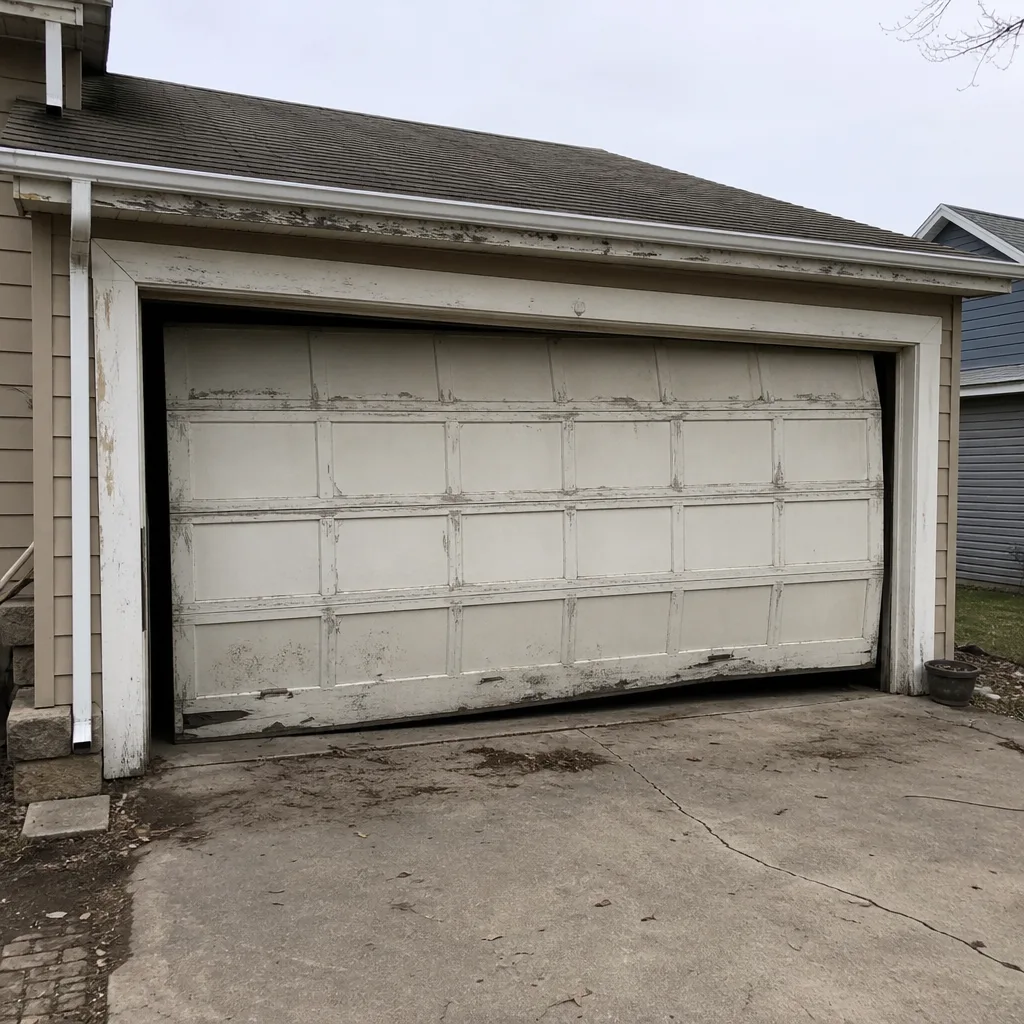 Before
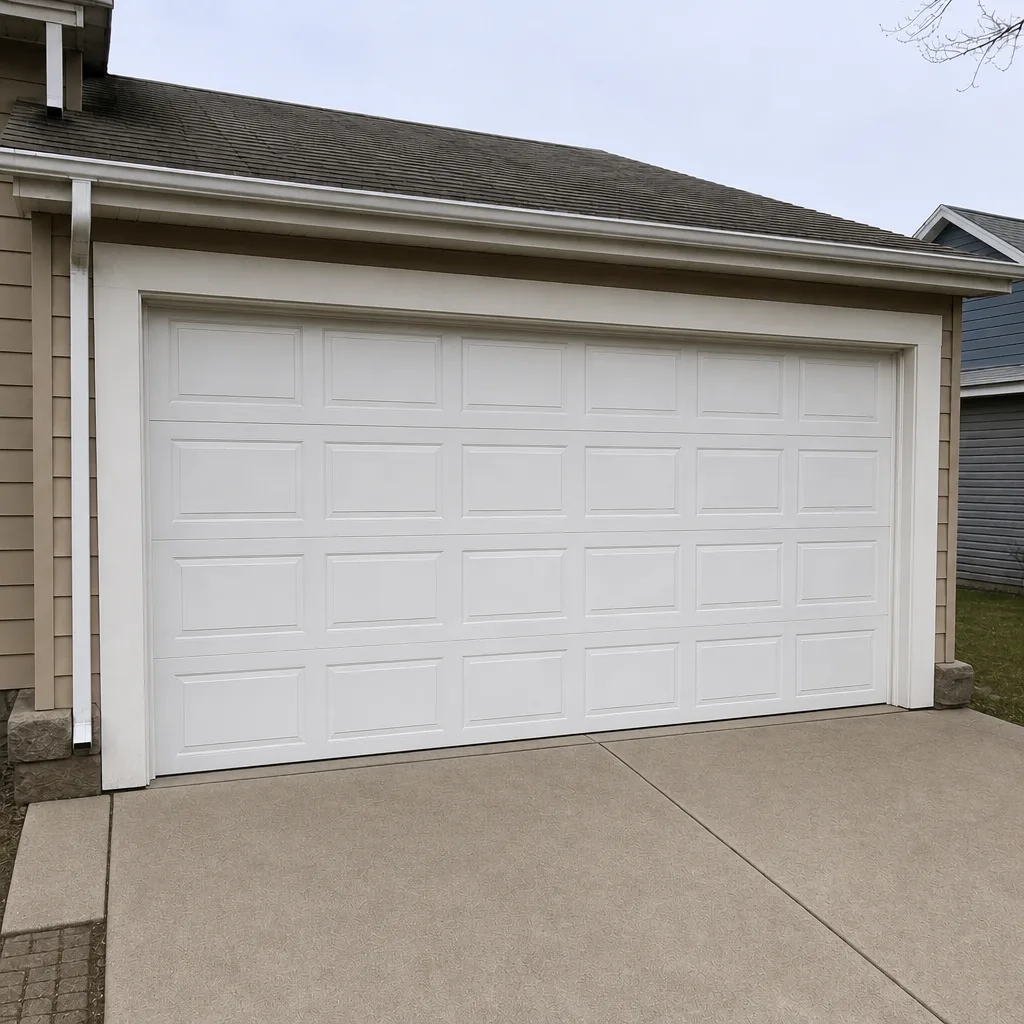 After
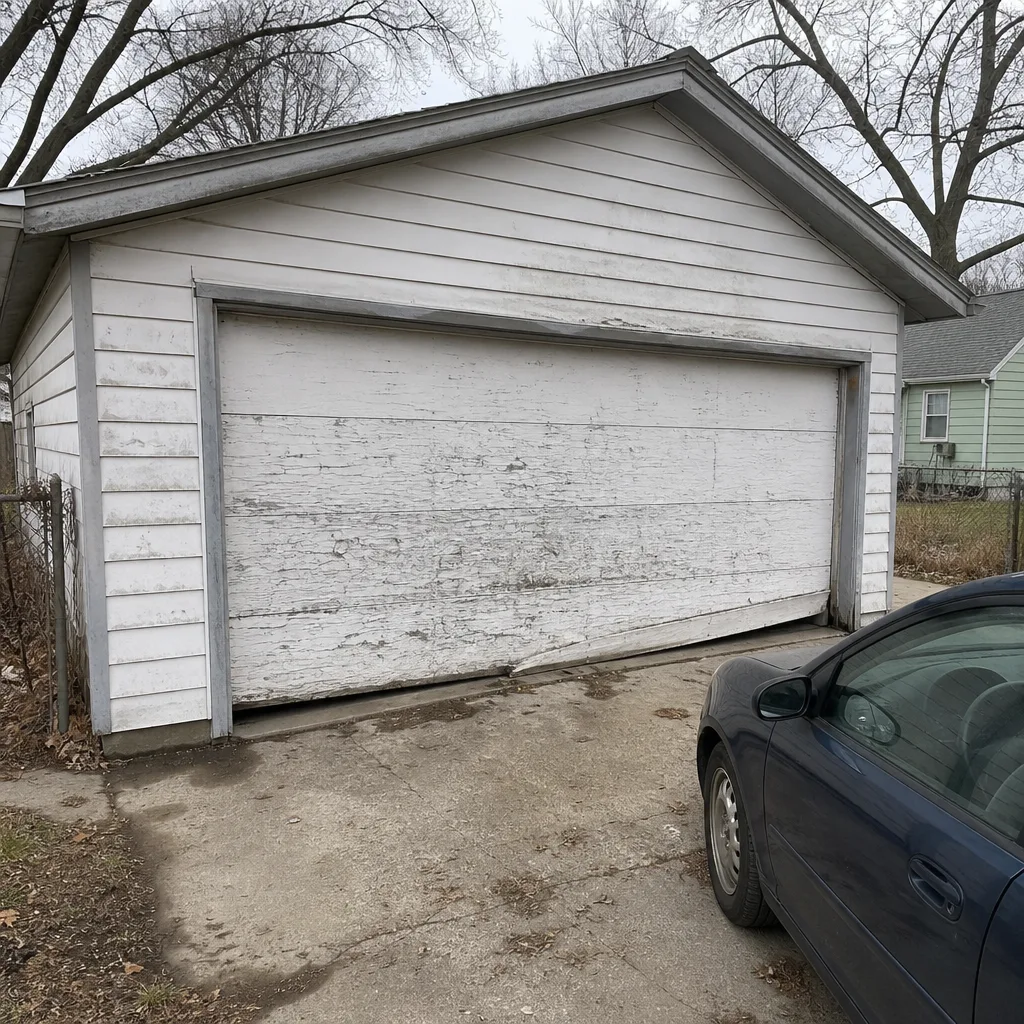 Before
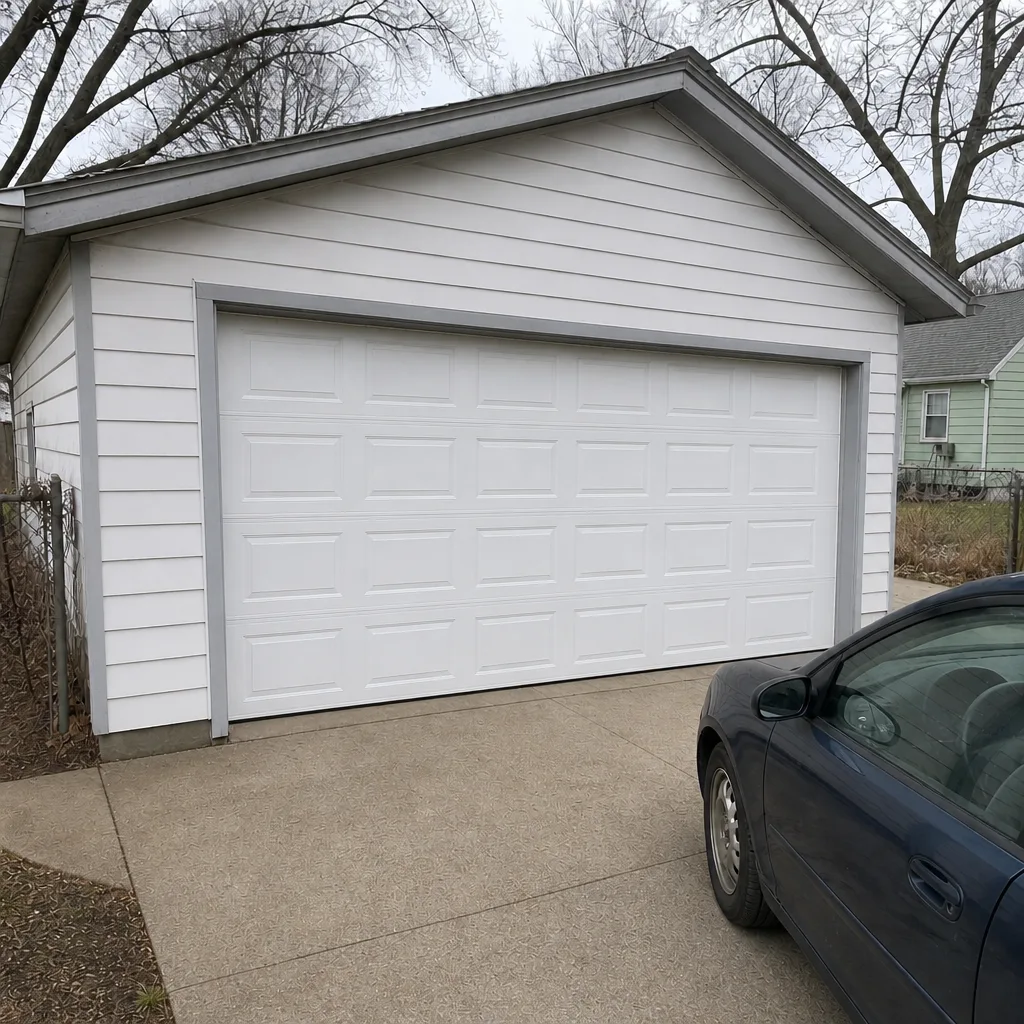 After
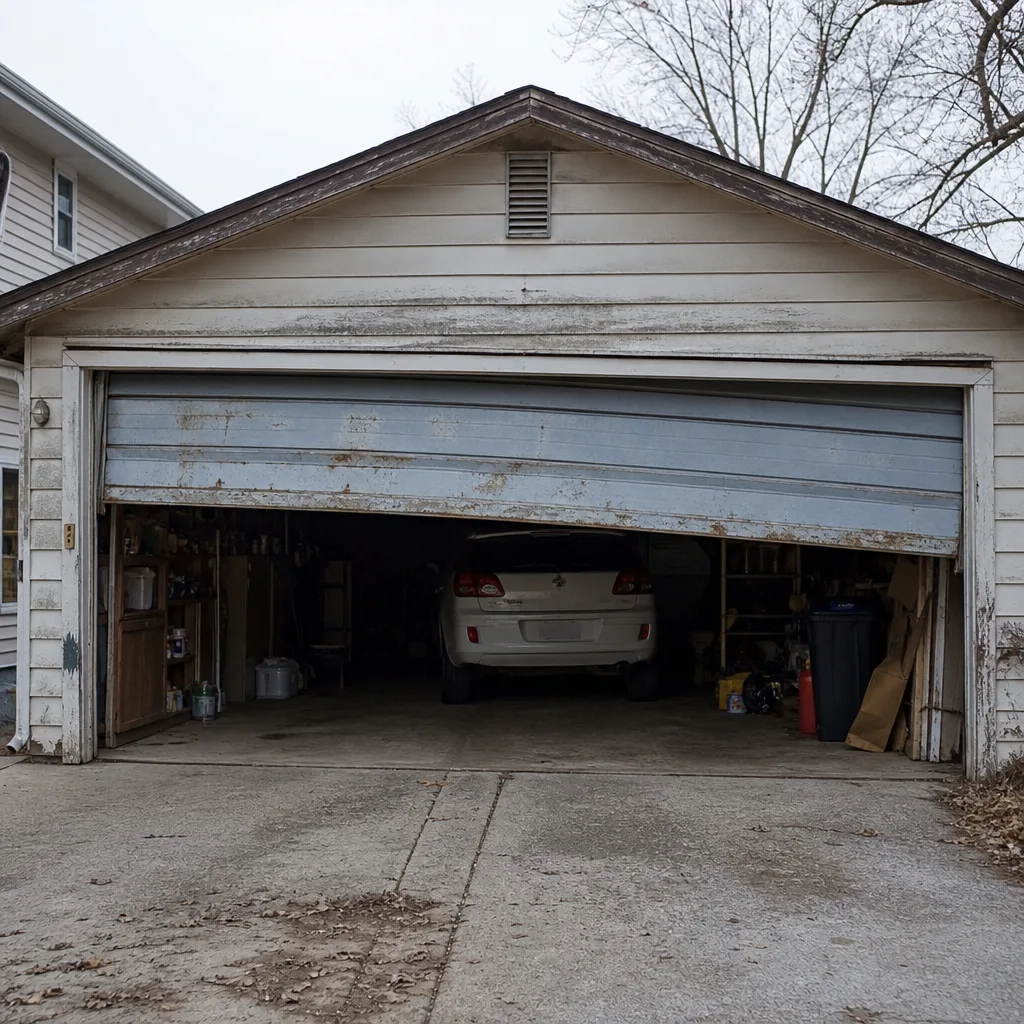 Before
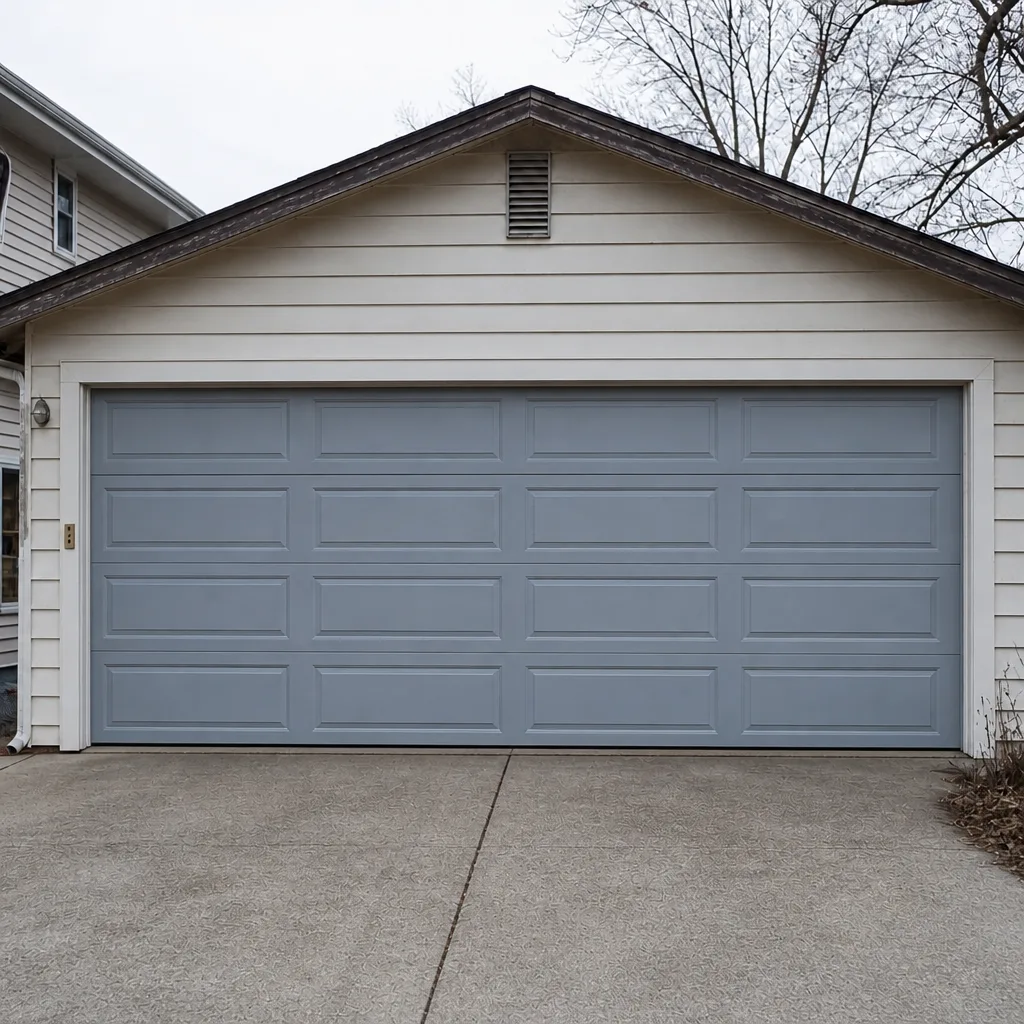 After
When to Call a Professional
Some garage door problems are safe to inspect yourself: a grinding noise, a door that reverses mid-travel, a remote that won’t sync. Others are genuinely dangerous. A snapped torsion spring, a frayed cable under tension, or a door that’s come off its track all carry real injury risk and need a trained technician. Electrical work on the opener’s wiring, gas lines near the garage, and anything that involves reaching over a loaded door are also jobs to hand off. If you’re unsure, err on the side of calling.
Garage Door Repair Kingfield offers free estimates in Kingfield, with prices quoted and agreed before any work starts. Our technicians handle springs, cables, openers, panels, and full installations, and they’re equipped for LiftMaster, Chamberlain, Genie, Clopay, Amarr, Wayne Dalton, Craftsman, and Raynor systems. Call (877) 492-3659 for a free estimate. We’re open Sunday through Friday, 7am to 7pm, and closed Saturday.
Frequently Asked Questions
Garage door repair in Kingfield typically costs $150 to $450 for common fixes, with spring replacement running $150 to $340 for a single spring and a matched pair costing roughly twice that. Opener repair lands between $120 and $350 depending on the fault, and panel replacement runs $250 to $600. The written estimate you agree to before work starts is the final price. Call (877) 492-3659 for an exact quote; estimates are free.
Travel time and parts sourcing are the main reasons, not markup. A technician driving out to Kingfield from a metro hub loses 45 to 90 minutes round-trip, and specialized parts often need ordering rather than pulling from a local shelf. A $50 to $100 premium over metro quotes is normal here. A $200 gap usually points to a different parts spec, so ask what’s different before you decide.
Replace both if they were installed at the same time and one breaks. Springs on the same door wear at nearly the same rate, so the second one is usually close behind. Two separate service calls typically cost $40 to $80 more than replacing the pair in one visit, and a mismatched pair stresses the opener. Always confirm whether a quote is for one spring or a pair before comparing prices.
No, the agreed written price is what you pay. A fair quote accounts for the door’s condition and the parts needed, and any change should require your approval before work continues. If a technician arrives and the price suddenly climbs without explanation, that’s a red flag. Ask for the written quote up front and hold the contractor to it.
We’re closed Saturday, but we’re open Sunday through Friday, 7am to 7pm, so a Saturday failure can be booked for Sunday. Emergency service is a real offering, not an upsell, and a door stuck open or unable to close gets priority scheduling. Call (877) 492-3659 and we’ll book you for the earliest available time.
Yes, the local professionals we connect you with are licensed and insured as their state requires, and our technicians have up to 10 years of experience. They’re equipped to service LiftMaster, Chamberlain, Genie, Clopay, Amarr, Wayne Dalton, Craftsman, and Raynor products. Ask for credentials on any quote if you want them in writing. Call (877) 492-3659 for a free estimate.
The Bottom Line
The gap between a $189 quote and a $340 quote for the same spring is almost never about the hourly rate. It’s about the parts spec, the labor standard, and whether the quote is for one spring or a pair. In Kingfield, rural travel and parts sourcing add a legitimate $50 to $100 to most quotes, and that premium is normal. Insulation, gauge, and hardware account for most of the $800 swing in installation prices. The three line items that reveal fair pricing are the parts spec, the labor breakdown, and the warranty. Ask for all three in writing, confirm the price is agreed before work starts, and you’ll choose right far more often than a homeowner who defaults to the lowest number. That’s the whole framework, and it’s yours to use.
Written by the team at Garage Door Repair Kingfield.